What's the Best Commercial Flat Roofing Material for New England
August 31st, 2026
5 min read
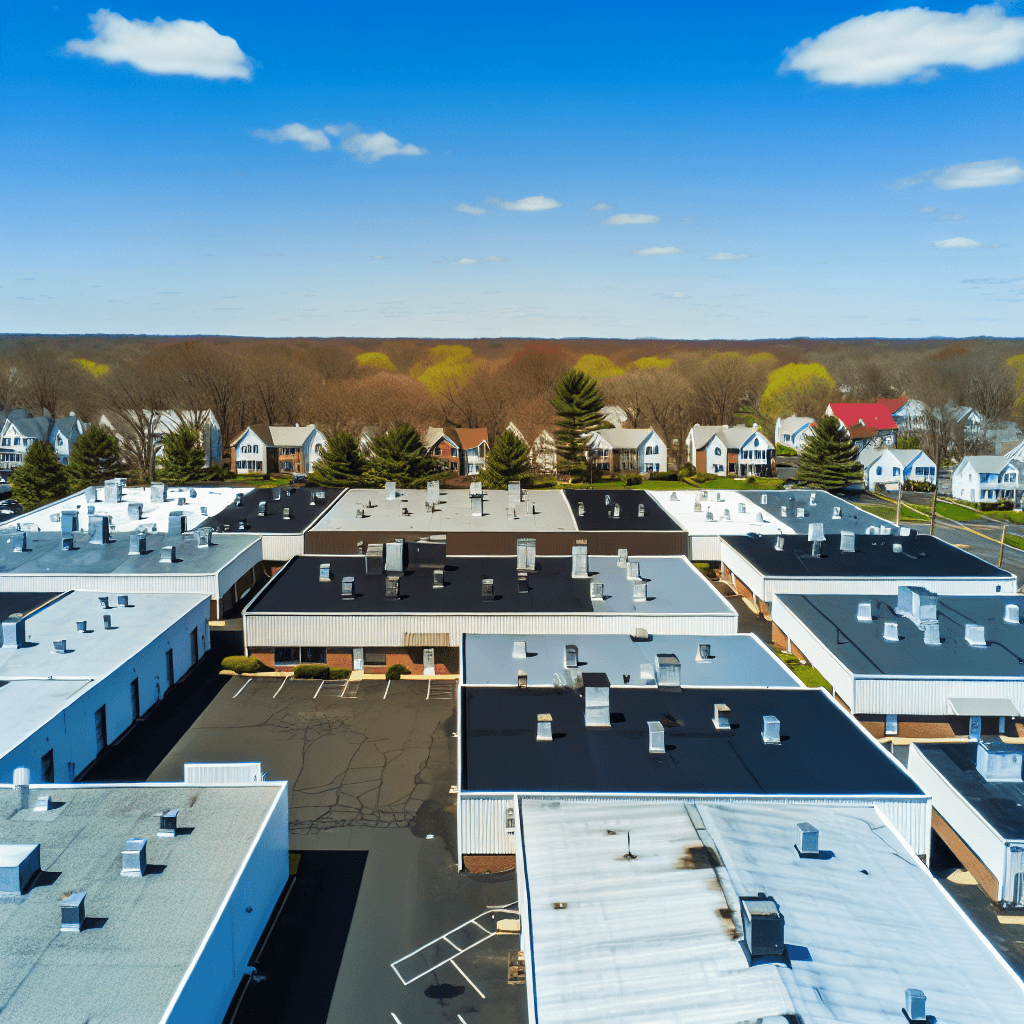
Choosing the right material for your building's flat roof shapes your energy costs, how well the seams hold up, and how many callbacks you get after the first hard winter, and TPO, EPDM, and PVC each perform differently in New England's climate.
At Adam Quenneville Roofing and Siding, we install all three systems across New England, and we lean on Duro-Last PVC more often than any other system because of its factory-welded seams and manufacturer-backed warranty. Because we install it so often, you might expect us to say it's the automatic answer for every building. It isn't.
Budget, roof configuration, and how the building is used all factor into the right call, so this guide lays out where each system performs best, how to tell if your existing roof needs repair or replacement, and which warning signs are worth a second look.
TPO vs. EPDM vs. PVC: A Side-by-Side Comparison
All three systems are proven in commercial applications. Here's how they compare on the factors that matter most for a New England roof.
- Energy Efficiency — affects your summer cooling costs and how hard your HVAC system has to work.
- Seam Strength & Installation — seams are typically where flat roofs fail first, so how they're formed matters as much as the material itself.
- Durability — determines how well the roof holds up to foot traffic, punctures, and building movement over time.
- Longevity — sets realistic expectations for how many years you'll get before replacement.
- Cold-Weather Installation — New England's installation window is short, and how a material handles cold-weather application affects seam quality and long-term performance.
|
Feature |
PVC (Duro-Last) |
TPO |
EPDM |
|
Energy Efficiency |
Excellent. The white reflective surface performs on par with TPO for cutting summer cooling costs. |
Excellent. The white surface reflects solar radiation and reduces cooling costs. |
Poor in the standard black color. A white EPDM option exists but at a higher price point. |
|
Seam Strength & Installation |
Panels are factory-fabricated in larger sections and heat-welded on site, so there are fewer total seams. PVC also has a long track record with field welding — the process is well-established and considered relatively forgiving for installers. |
Also heat-welded on site, with more total seams than PVC due to standard panel sizing. TPO welding requires tighter temperature control — the window between an under-welded and over-welded seam is narrower, which puts more weight on installer precision. |
Seams are adhered or taped rather than welded, and are more prone to degrading over time from UV exposure and ponding water. |
|
Durability |
Highly resistant to chemicals, grease, and punctures. |
Polyester-reinforced core gives good puncture resistance. |
Flexible rubber resists cracking from building movement and thermal cycling, though seams remain the weak point. |
|
Longevity |
Highly resistant to chemicals, grease, and punctures. Handles rooftop foot traffic well. Many PVC membranes use anti-wick yarn in the internal reinforcement scrim, which helps block moisture from traveling along the threads if an edge is ever exposed — and PVC tends to stay more pliable and chemically resistant as it ages. |
Polyester-reinforced core gives good puncture resistance. Standard TPO membranes often use untreated reinforcement yarn, which can allow some water wicking if an edge is exposed, and older TPO can become more brittle over time — making hot-air weld repairs harder to execute cleanly on an aged roof. |
Flexible rubber resists cracking from building movement and thermal cycling, though seams remain the weak point. |
|
Cold-Weather Installation |
Field-welded like TPO, but PVC's larger factory-fabricated panels mean fewer total seams to weld — and PVC's more forgiving welding tolerance helps offset the added difficulty of cold-weather test welds and temperature adjustments. |
Field-welded seams require tighter temperature control to begin with, and that margin narrows further as temperatures drop — making late-fall installs more dependent on installer precision and daily test welds. |
Uses adhesives rather than welding for seaming and flashing, and those adhesives thicken and take longer to cure in cold temperatures, which can slow application and affect bond quality. |
|
Cost |
Typically the highest-priced of the three per square |
Typically mid-range, often the most budget-friendly of the three |
Often comparable to or slightly below TPO |
Which Flat Roof Option Fits Your Building?
The right choice depends on your building's use, roof configuration, and budget. Here's the guidance we walk clients through.
Choose PVC (Duro-Last) for Long-Term Reliability and Fewer Field Seams
We recommend Duro-Last PVC for buildings where minimizing seam failures and maximizing warranty coverage matter most: retail centers, restaurants, schools, and any building where downtime from a leak is expensive.
Its resistance to grease and chemicals also makes it a strong fit for restaurants and buildings with rooftop kitchen exhaust. Because the panels are factory-welded and shipped ready to install, the crew spends less time field-welding seams in unpredictable New England weather, which shortens install time and reduces one of the biggest sources of long-term leaks.
Choose TPO for Budget-Conscious Energy Savings
TPO remains a strong, more budget-friendly option for sun-exposed buildings where reflectivity and cooling costs are the priority, office buildings, warehouses with rooftop HVAC, and retail space.
Its heat-welded seams perform well when installed in good conditions, though we plan TPO installs around the calendar more carefully than PVC, since field-welding quality is more sensitive to cold, damp weather.
Consider EPDM for Shaded or Low-Traffic Roofs
EPDM is still a reasonable choice for budget-constrained projects or buildings with significant shade, which lessens the impact of its heat-absorbing black surface. Warehouses and storage buildings with good drainage and minimal foot traffic are reasonable candidates for a durable, long-lived EPDM roof, provided the seams are inspected regularly.
Whichever membrane you choose, performance depends on the insulation underneath it just as much as the top layer. A roof inspection should always include an inspection of the insulation, since moisture-saturated or compressed insulation, common after a winter of freeze-thaw cycling, will undermine any new roof system, regardless of the membrane on top.
Repair vs. Replace
Choosing a material is only half the picture. If your existing flat roof is already showing problems, the real question isn't TPO vs. PVC vs. EPDM — it's whether it's worth fixing what you have.
Repairing is the right call when the problem is isolated, the membrane is under 15 years old, and the underlying insulation is dry and sound. A single puncture or a minor seam separation can often be fixed without the cost of full replacement.
Replacement becomes the more cost-effective path when the issues are systemic: widespread membrane cracking or blistering, multiple seam failures, or insulation that's taken on moisture. If a roof has needed repeated repairs in the same spots, or is nearing the end of its expected service life, replacing it before winter, when snow load and ice make problems harder to access and more expensive to fix, is usually the prudent move. A commonly used industry rule of thumb: if your repair costs over the last two years approach 30% of a full replacement, you're likely spending money to delay the inevitable.
What Signs Signal Potential Issues With Flat Roofs?
Walk your roof at least twice a year, ideally before winter and again after spring thaw, and use this checklist to spot trouble early.
On the Membrane Surface
- Visible cracks, splits, or tears
- Blisters or bubbles, which indicate trapped moisture
- Membrane pulling away from walls, curbs, or edges
- Dark staining or algae growth
At Seams and Flashings
- Seams separating or with lifted edges
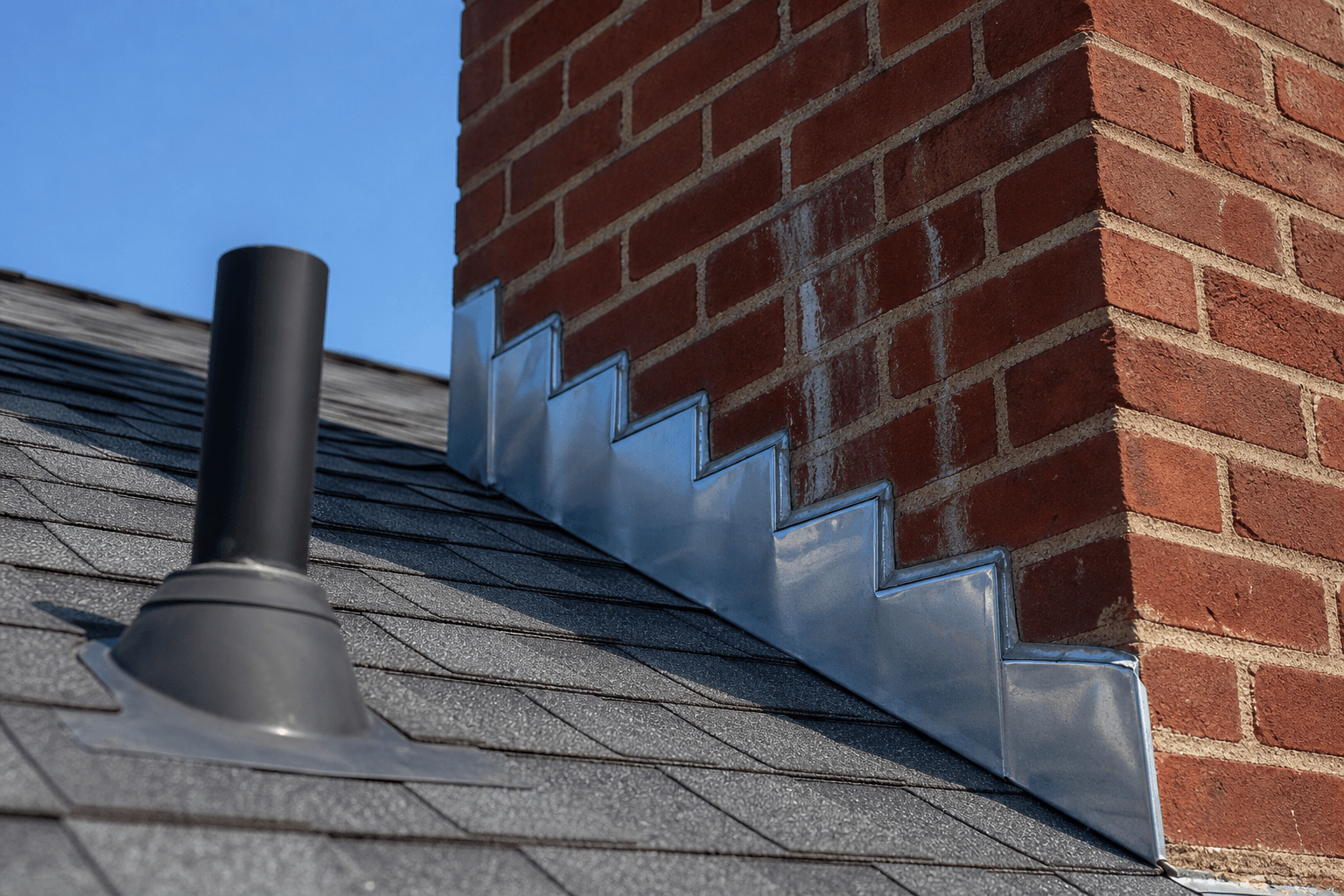
- Flashing pulling away from HVAC units, vents, or pipes
- Cracked or missing sealant at penetrations
Drainage and Interior
- Water standing for more than 48 hours after rain or snowmelt (ponding)
- Clogged drains, or ice damming around drains in winter
- Water stains, musty odors, or sagging ceiling tiles inside the building
Schedule a Fall Inspection Before Winter Decides for You
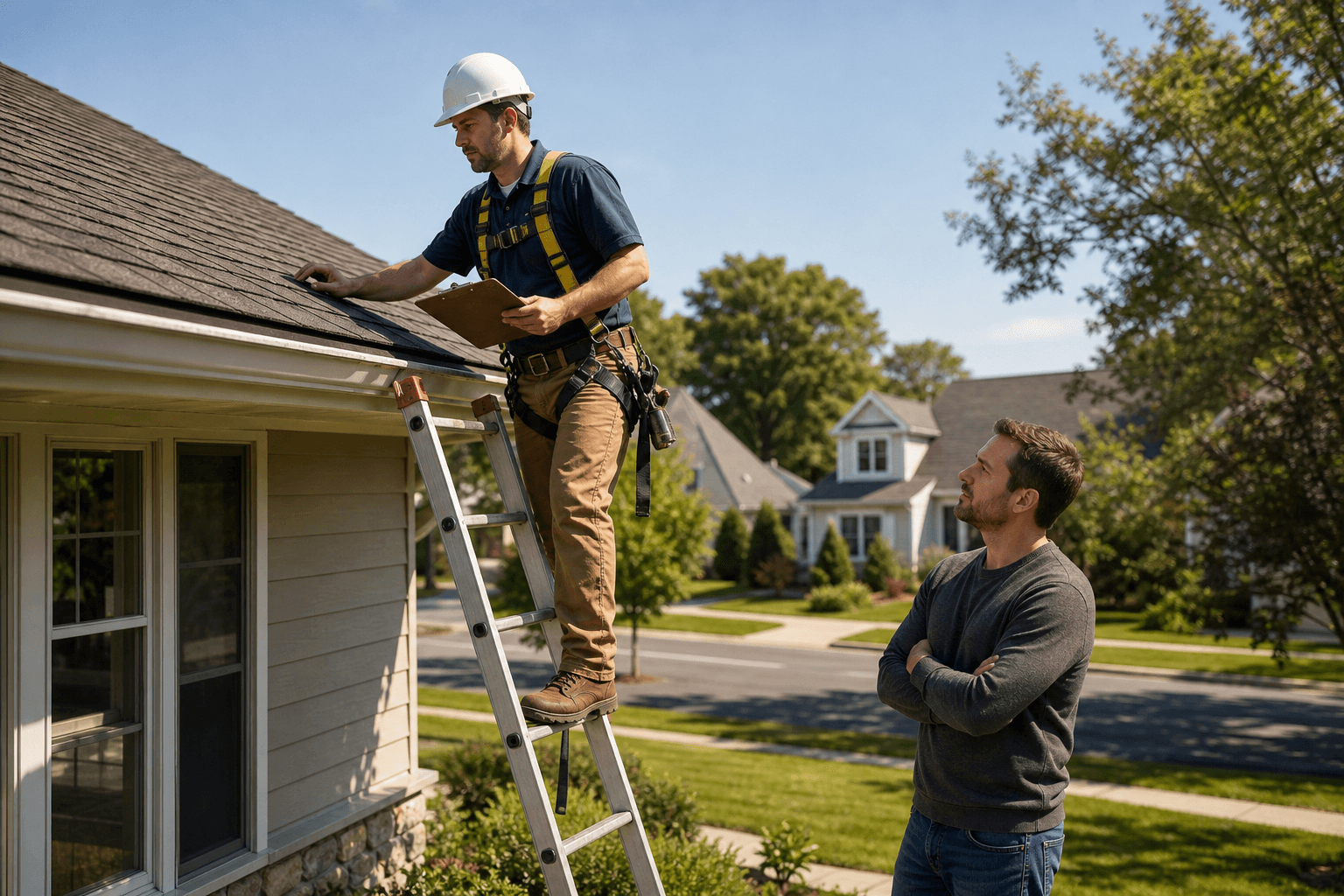
If you checked any of those boxes, the next step is a professional inspection before a small issue turns into a costly failure. A commercial flat roof in New England takes a beating from two directions each year, summer heat and UV, then winter snow load, ice, and freeze-thaw cycling, so catching problems on a spring or fall walkthrough is far cheaper than dealing with a leak mid-winter.
Whether you're specifying a new roof or trying to figure out how much life is left in your current one, AQRS can walk your roof, tell you honestly whether TPO, EPDM, or PVC makes the most sense for your building, and lay out a straightforward repair-versus-replace recommendation. Contact Adam Quenneville Roofing and Siding to schedule a commercial roof inspection.
Robert Croteau, Director of Sales & Finance
With over 25 years at Adam Quenneville Roofing & Siding, Bob brings deep experience across installation, project management, and leadership. GAF Certified- and OSHA-10 certified and trained in finance and operations, he helps homeowners make confident, informed decisions, blending technical know-how with business insight.
Topics: