Is Roof Maxx a Scam or Does It Really Work?
August 12th, 2026
10 min read
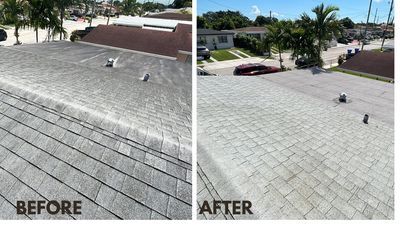
Many homeowners today are hearing about Roof Maxx, a soy-based “roof rejuvenation” treatment that claims to extend the life of aging shingles. And naturally, people want to know:
“Is this actually legit, or is it just another gimmick?”
If you’re asking that question, you’re not alone. Roof Maxx has exploded in popularity over the last few years, and with it has come plenty of curiosity… and plenty of skepticism.
Before we go any further, it’s important to be upfront: yes, we do offer Roof Maxx treatments. And because of that, we know some homeowners may immediately wonder whether this article is going to be biased.
That’s fair, and honestly, we’d be asking the same question.
The roofing industry has seen its share of “miracle products,” and homeowners aren’t wrong to be cautious. Most people simply don’t want to waste money on something that sounds great in an ad but doesn’t deliver in real life.
So here’s our commitment: this article isn’t about pushing Roof Maxx at all costs. It’s about laying out the facts… when it works, when it doesn’t, and when we actively tell homeowners not to use it. In fact, there are plenty of roofs we inspect where we turn the job down because we know Roof Maxx won’t solve the problem.
That said, interest in Roof Maxx has grown for a few real reasons:
- Rising roof replacement costs
- Increased marketing from Roof Maxx dealers
- Social media buzz around roof rejuvenation
- The eco-friendly appeal of extending roof life and keeping shingles out of landfills
But the real reason homeowners ask us about Roof Maxx has nothing to do with trends.
They’re trying to figure out whether it’s a smart, money-saving option or just a temporary Band-Aid being marketed as a long-term solution. And that’s exactly what we’re here to help you determine.
What Is Roof Maxx and How Is It Supposed to Work?
Roof Maxx is a soy-based, plant-derived oil treatment designed to restore flexibility to aging asphalt shingles. Over time, shingles lose the oils that keep them pliable, leading to brittleness, cracking, granule loss, and premature wear.
According to Roof Maxx’s claims, the product:
- Rehydrates dry shingles by absorbing into the asphalt
- Restores flexibility, allowing shingles to expand and contract again
- Helps slow down further brittleness
- Can add up to 5 years per application, up to three times (max 15-year extension)
The concept is based on the idea that asphalt shingles age primarily due to oxidation and lost oils. Roof Maxx’s treatment aims to replace those oils, similar to “moisturizing” dried-out material.
Findings of an Ohio State University Study on Roof Maxx
In a technical study conducted by Ohio State University’s Department of Food, Agricultural and Biological Engineering, researchers examined how Roof Maxx affects the flexibility and performance of aged asphalt shingles.
Key findings included:
- Treated shingles exhibited greater flexibility than untreated samples.
- Some treated shingles showed improved resistance to cracking during mechanical testing.
- The treatment penetrated the shingle surface, indicating that absorption, not just coating, was occurring.
- Researchers noted that the effectiveness of rejuvenation varied depending on the starting condition of the shingles.
This is one of a few third-party studies that provide measurable data supporting Roof Maxx’s claims, though it does not suggest the treatment restores shingles to “like-new” condition or guarantees long-term performance beyond the tested effects.
Who Is Roof Maxx Best Suited For? And Who Shouldn’t Use It?
Roof Maxx isn’t a one-size-fits-all solution. In fact, Roof Maxx dealers and the company itself acknowledge that only certain roofs qualify, and even fewer are good candidates for meaningful results. Knowing whether your roof fits the criteria is essential before considering the treatment.
Best Suited For: Roofs That Are Aged But Still Structurally Sound
Roof Maxx works best on roofs that are:
- 7–15 years old, depending on sun exposure
- Dried out or showing early brittleness
- Losing flexibility but not yet cracking severely
- Properly ventilated and installed
- Still lying flat with no curling, cupping, or lifted shingles
These roofs still have enough integrity that adding flexibility back can buy a few years of life.
Based on the Ohio State University study:
Roofs that are not fully deteriorated showed measurable flexibility improvements after treatment, reinforcing that Roof Maxx is for aging roofs, not failing ones.
Roof Maxx suggests applying their treatment when your asphalt roof starts showing signs of aging, typically when it's 6-10 years old, depending on climate (younger in warmer areas like 6-8 years, older in cooler areas like 8-10 years) but we have seen applications work wonders on a 20 year old roof that was showing no other signs of deterioration.
Who Should Not Use Roof Maxx
Even as a Roof Maxx dealer, we have to say: some roofs are simply not candidates. If any of these apply, the product won’t correct the underlying issues.
-
Roofs with active leaks or water intrusion
Roof Maxx does not repair flashing, underlayment failure, or penetrations.
- Roofs with significant granule loss
Once granules are gone, UV damage accelerates rapidly and Roof Maxx cannot replace granules.
-
Roofs with cracked, curled, or cupped shingles
These physical defects indicate structural aging, not just dryness.
-
Roofs with installation problems
Poor nailing, missing underlayment, and improper ventilation cannot be fixed with a surface-level treatment.
-
Roofs that are too new
Shingles less than 6–7 years old typically don’t need rejuvenation; the oils haven’t depleted yet.
-
Roofs in extreme storm or heat environments
In areas with frequent high winds, hail, or extreme heat, rejuvenation may not deliver meaningful longevity.
Real World Example: We inspected a home in West Springfield, MA, where the shingles had significant edge curling from years of heat exposure and poor ventilation. Roof Maxx can restore flexibility, but it cannot reverse physical deformation like curling or cupping. We recommended not to proceed with a RoofMaxx treatment because in this case, the shingles had already lost their ability to lie flat, which meant water could travel underneath them, a risk no coating can fix.
Are There Locations Where Roof Maxx Performs Better?
Roof Maxx tends to perform better in regions with:
- Moderate climates
- Less extreme UV exposure
- Limited freeze-thaw stress
In harsher climates, the benefits may be reduced or shorter-lived.
Truth be told, New England isn’t the ‘harsh climate’ Roof Maxx struggles with. Even though it feels brutal in January, our region isn’t extreme enough to limit the product’s performance. Roof Maxx works well here when the shingles are still in good condition.
What Shingles Are Roof Maxx Treatments Compatible With?
Roof Maxx is designed for asphalt shingle roofs only. It does not apply to:
- Metal roofs
- Tile roofs
- Cedar shake
- Modified bitumen or flat roofs
Even among asphalt shingles, thicker architectural shingles tend to respond better than thin 3-tab shingles that are already near end-of-life.
Common Complaints and Concerns About Roof Maxx
Even with growing interest and some promising data, Roof Maxx still raises several legitimate concerns from homeowners and roofing professionals. These aren’t baseless fears; they come from real-world experiences, unanswered questions, and misconceptions about what roof rejuvenation can and cannot do.
Does It Actually Soak In or Just Coat the Surface?
Roof Maxx claims to penetrate deep into dried shingles, replenishing lost oils. The OSU study did find measurable absorption, but some contractors still question:
- How deep the absorption really goes
- Whether absorption varies by shingle type or age
- How long the restored flexibility truly lasts in real-world conditions
While lab results show penetration, field results are more mixed, especially on shingles already nearing end-of-life.
Does Roof Maxx Mask Bigger Issues?
One of the most common industry critiques is that Roof Maxx can hide underlying roof problems temporarily while the real issues continue unchecked.
Roof Maxx does not fix:
- Leaks
- Flashing issues
- Ventilation problems
- Poor installation
- Granule loss
- Structural deterioration
If a homeowner wants Roof Maxx but their roof has deeper issues, this is where we have to be crystal clear: we won’t do the treatment. We’re not in the business of taking someone’s money for a service we know won’t solve their problem. If Roof Maxx can’t help, we’ll tell you and guide you toward the right solution instead.
Is Roof Maxx Just a “Band-Aid” Instead of a Real Fix?
Critics argue that Roof Maxx provides temporary cosmetic improvement, not true structural restoration.
While Roof Maxx isn’t marketed as a replacement for major repairs, some homeowners mistakenly believe it will:
- Add 10–15 years to a failing roof
- Fix cracking shingles
- Reverse weather damage
- Extend lifespan regardless of roof condition
The reality is: Roof Maxx can buy time, but it cannot reset the clock on a worn-out roof.
Speaking from the perspective of a Roof Maxx dealer: Our inspection follows a straightforward evaluation process to determine whether a roof is still a good candidate for Roof Maxx. We look closely at the overall flexibility and condition of the shingles. If they bend without cracking, lie flat, and still have a reasonable amount of granules, Roof Maxx can help restore their life.
But if we see shingles that snap when lifted, have deep cracks, severe curling, excessive missing granules, or soft, spongy decking underneath, that tells us the roof has moved beyond the point where a treatment will make any difference. In those cases, we’re honest about it. Roof Maxx isn’t a miracle product if the shingles can’t be restored, we won’t recommend or apply it.
What Complaints Do Real People Have With Roof Maxx?
Like any roofing product, results vary. Common complaints reported online include:
- The roof looked “the same” after treatment
- No noticeable improvement in leaks or performance
- Treatment lasted less than expected
- Shingles continued deteriorating despite the application
- Homeowners felt misled by local dealers
Some of these issues stem from misuse, applying Roof Maxx to roofs that were already failing. Others stem from inconsistent dealer quality, since individual franchisees vary in experience.
Roof Maxx isn’t a scam, but it’s also not magic.
Most complaints come from:
- Applying it to roofs that weren’t eligible
- Expecting results it isn’t designed to deliver
- Confusion about what rejuvenation means
- Mixed results depending on shingle condition and climate
Understanding these limitations prevents homeowners from being disappointed or misled.
As a rule, if the shingles bend without breaking, Roof Maxx is worth discussing; if they crack or crumble, we won’t recommend it.
What Positive Things Do Real Homeowners & Contractors Have To Say About Roof Maxx?
Despite the skepticism and limitations, Roof Maxx does have several documented benefits, supported by both homeowner reviews and technical evaluations.
While it’s not a replacement for a new roof, Roof Maxx can provide meaningful value when used on the right roofs, at the right time.
1. Increased Shingle Flexibility (Verified by OSU Study)
One of the clearest benefits supported by third-party testing is:
Roof Maxx can make dried shingles more flexible again.
The Ohio State University study found:
- Treated shingles became more pliable
- Flexibility increased compared to untreated samples
- Some resistance to cracking improved
- The treatment penetrated, rather than simply coating the surface
This suggests Roof Maxx can help shingles better withstand wind uplift, expansion/contraction, and thermal cycling IF the shingles are not already too far gone.
One of the most eye-opening experiences our team had with Roof Maxx came from our own stockyard. We found an old bundle of shingles that had been sitting for years in a full-sun corner, completely forgotten. These shingles were dry, stiff, and visibly aged from nonstop UV exposure.
Out of curiosity, we treated a few of them with Roof Maxx to use as a demonstration piece at a home show. The difference was obvious. The untreated shingle still cracked when bent, while the treated shingle regained flexibility and could be manipulated without breaking. Even people walking by the booth could feel the contrast immediately when they picked them up.
Our teams see the same thing in the field: when shingles are still in that early-to-mid aging stage, Roof Maxx noticeably softens and restores them. But once a shingle snaps or curls we know it’s too far gone. That hands-on testing, both in our yard and on real homes, is exactly why we’re confident recommending Roof Maxx only when the roof can truly benefit from it.
2. Lower Cost Than Roof Replacement
Many homeowners seek out Roof Maxx because it costs:
- 70–80% less than a full roof replacement
For homeowners on a tight budget or those who only need a few more years out of their roof, this can be attractive.
Typical use cases:
- Saving time to budget for a future replacement
- Extending the life of rental property roofs
- Getting more life out of shingles before selling a home
Real World Example: Depending on the size of the roof in our area we have provided a tune-up and Roof Maxx treatment on average $2,000 -$4,000 vs the 20% more expensive replacement.
3. Eco-Friendly Appeal
Roof Maxx markets itself heavily as an environmentally friendly solution because it:
- Keeps asphalt shingles out of landfills
- Reduces the need for early tear-offs
- Uses plant-based oils
- Requires no combustion or heavy machinery
For environmentally conscious homeowners, this is a meaningful selling point.
At Adam Quenneville Roofing and Siding, we always try to save a roof when it’s genuinely possible. Not every roof needs to be torn off, and not every homeowner needs a full replacement. When rejuvenation is the right fit, the sustainability benefits are real.
Using Roof Maxx allows us to keep thousands of pounds of asphalt shingles out of landfills, extending the life of an existing roof instead of throwing it away. Every year, roofing waste makes up a huge portion of U.S. landfills, so when we can safely and responsibly extend the life of what you already have, we do.
And the impact doesn’t stop at waste reduction. By preserving shingles rather than replacing them, we’re also reducing the demand for manufacturing new ones, which helps cut down on energy use, raw materials, and transportation emissions tied to shingle production.
4. A Useful Temporary Extension of Roof Life
Roof Maxx can be a bridge solution for certain homeowners not a permanent fix, but a way to safely buy time.
Examples:
- A homeowner plans to sell in 2–5 years
- A roof is aging but not failing
- A business or rental property owner wants a low-cost interim solution
- A homeowner needs time to save for a full replacement
In cases like these, adding 5–10 more years of life (over one or two treatments) can make financial sense.
5. Positive (But Mixed) Homeowner & Contractor Reviews
Third-party sources like the BBB, Google reviews, and contractor forums show a consistent trend:
- Many homeowners are satisfied when Roof Maxx is applied to roofs in good condition.
- Dissatisfaction is far more common when applied to roofs past the point of rejuvenation.
- Contractors who use it selectively report decent results; those who use it broadly report more mixed outcomes.
This reinforces the core truth: Roof Maxx works best on the right roofs and fails when misused.
Is Roof Maxx a Scam? Our Verdict Based on the Evidence
Roof Maxx isn’t a scam but it’s also not a miracle product. The truth sits somewhere in the middle.
Based on third-party studies, homeowner feedback, and what contractors see in the field, Roof Maxx can genuinely help certain roofs by restoring some flexibility and slowing down brittleness. It can also be a cost-effective option for homeowners needing short-term life extension.
But Roof Maxx does not:
- Repair structural damage
- Reverse granule loss
- Fix leaks or installation issues
- Restore a failing roof
- Add decades of life to shingles
- Replace the need for a full roof replacement
Roof Maxx works when the roof is a good candidate and disappoints when it’s not.
The misunderstanding occurs when homeowners assume Roof Maxx can “save” any old roof. It can’t. It is a temporary extension product, not a cure-all.
Questions to Ask Before Hiring a Roof Maxx Dealer
Before you move forward with any roof rejuvenation treatment, vet the contractor carefully. Ask:
- Is my roof genuinely a good candidate? Why?
- What issues will Roof Maxx NOT fix?
- What warranty does the dealer provide, and what exactly does it cover?
- How long should I realistically expect the treatment to last?
- Are you licensed and insured to perform this work?
- Will the treatment affect my existing shingle warranty?
- Who performs the inspection, a salesperson or a trained roofer?
Getting a roof inspection from a qualified roofing contractor first is often the safest starting point.
Should You Try Roof Maxx or Skip It? Here’s How to Decide
Here’s the simplest way to know if Roof Maxx is worth considering:
Roof Maxx may be a good fit if:
- Your roof is 7–15 years old
- Shingles are dried out but not cracking
- There are no leaks or ventilation issues
- You need a few more years before replacing the roof
- You want a lower-cost, eco-friendly option
You should skip Roof Maxx if:
- Your shingles are cracking, curling, or losing granules
- The roof has leaks or flashing problems
- Ventilation or installation issues exist
- The roof is already near end-of-life
- You want long-term, guaranteed performance
In other words: Roof Maxx is a bridge, not a replacement.
It can buy time when used correctly, but it should never delay necessary repairs or substitute for a full replacement when the roof is failing.
Roof Maxx isn’t a scam, but it isn’t a silver bullet either. Like most roofing solutions, it has the potential to work well in the right circumstances and fail in the wrong ones. The best way to know if it’s right for you is to get an honest assessment of your roof’s condition from a qualified roofing professional who isn’t incentivized to push the product one way or the other.
With 17 years of experience in exterior remodeling and property insurance, Ron built his foundation working across the Midwest and South, mastering roofing, siding, windows, and gutters before specializing in helping homeowners identify claim-worthy damage, navigate the filing process, and work directly with adjusters. Now in his fifth year with Adam Quenneville Roofing & Siding, Ron brings the same personal integrity he was raised on to every conversation not to sell homeowners, but to educate them, so they understand their home, their options, and exactly what they are getting before they ever sign anything.
Topics: