Roof Flashing Explained: What Homeowners Should Know Before Approving a Roof Repair or Replacement
September 9th, 2026
5 min read
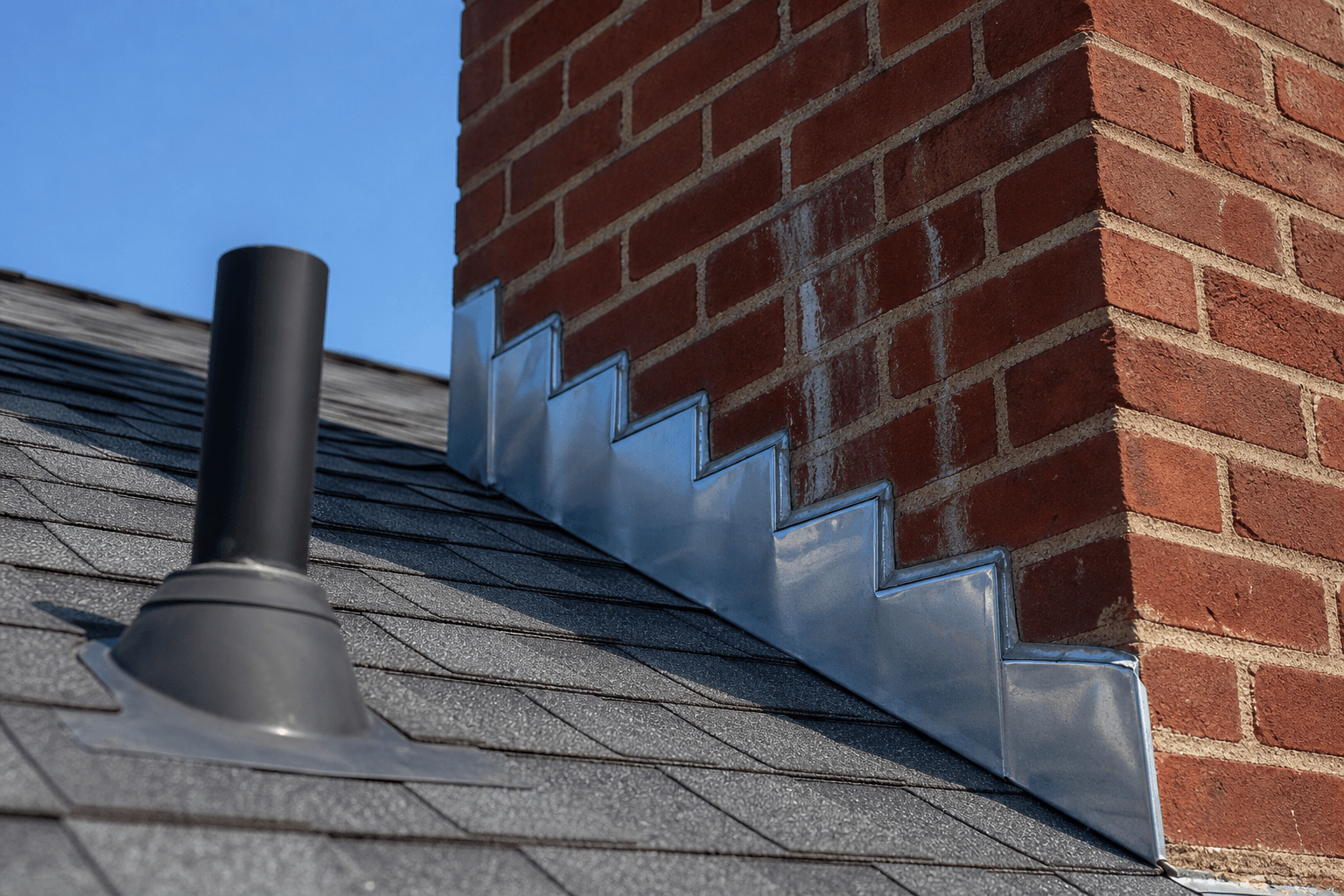
If you've ever had a roof leak that turned out to be a flashing problem instead of a shingle problem, you already know how confusing flashing can be; most homeowners have never heard the word until something's gone wrong. At Adam Quenneville Roofing & Siding, we install and repair flashing every single day, and "what does flashing actually do?" is one of the questions we get asked most.
Since we sell flashing repairs, you might expect us to tell you every leak means you need new flashing. That's not the case; a lot of flashing issues can be fixed without touching the rest of your roof, and we'll be upfront about which is which.
In this article, we'll break down what flashing actually does, the different types and where each one goes, when it can be repaired instead of replaced, and the warning signs that tell you it's failing. By the end, you'll know enough to ask the right questions instead of just nodding along.
What Roof Flashing Actually Does
Flashing is a thin material, almost always metal, installed anywhere your roof has a "break" in it (often called protrusions); meaning any spot where the flat plane of the roof is interrupted by something sticking up through it, meeting a wall, or changing angle. These breaks are the weak points where water can work its way in, so they need their own layer of protection beyond just shingles. Common examples include:
- Chimneys
- Skylights (often come with their own flashing attached)
- Dormers/Walls
- Vents
- Pipes
Shingles shed water well off a continuous surface. The moment there's a joint, a corner, or something poking through the roof, shingles alone can't seal that gap. Flashing is what closes it, directing water down and off the roof instead of letting it work its way underneath.
Here's the plain-English version: your shingles are the raincoat, flashing is the zipper. A raincoat with a broken zipper still looks fine from a distance. It still lets water in exactly where you need it to keep water out.
The Different Types of Flashing (and Why It's Not One-Size-Fits-All)
Not all flashing is installed the same way, because not all roof intersections are the same:
- Drip edge flashing – runs along the eaves and rakes, protecting the fascia and guiding water into your gutters instead of under the shingle edge.
- Step flashing – used where a roof meets a sidewall or chimney, installed in overlapping L-shaped pieces in a “stair-step” pattern so water always has somewhere to go.
- Counter flashing- it's embedded into the wall, cut into a mortar joint on masonry or tucked under siding on a frame wall, and hangs down over the base flashing without being fastened to it. It sheds water running down the wall face onto a base flashing, and it covers the top edge of the base flashing so water can't get behind it (most common on chimneys).
Why this matters to you as a homeowner: if a contractor tells you they're “adding flashing” without telling you which kind or where, that's a fair question to ask. The type and placement matter as much as the material.
Can Flashing Be Added or Fixed Without Replacing the Whole Roof?
Yes, in many cases, flashing can be repaired or replaced on its own, but not always, and this is where a lot of homeowners get either overcharged or under-informed.
- Isolated flashing repair or replacement is possible in many cases, especially around chimneys, vents, or skylights, without touching the rest of the roof.
- Flashing that's failing because the shingles around it are also failing is a different story, in that case, you can't just patch the flashing. The surrounding roof needs to be replaced.
- Flashing added during a full roof replacement is installed underneath the shingles, which is the only way to get it properly integrated. That's also why flashing typically can't be cleanly "added" to an existing older roof without disturbing the shingles around it.
The honest answer is: it depends on the condition of what's around the flashing, not just the flashing itself. Anyone who tells you it's always a simple fix, or always requires a full replacement, isn't giving you the full picture.
Signs That Your Roof Flashing May Be Failing
You usually won't see flashing itself fail from the ground. What you'll see instead are the downstream signs:
- Water stains on ceilings or walls near a chimney or where an addition meets the main roof
- Rust streaking or visibly lifted metal around vent pipes or chimneys
- Damp insulation or musty smell in the attic near roof penetrations
- Granules or debris collecting near valleys after a storm
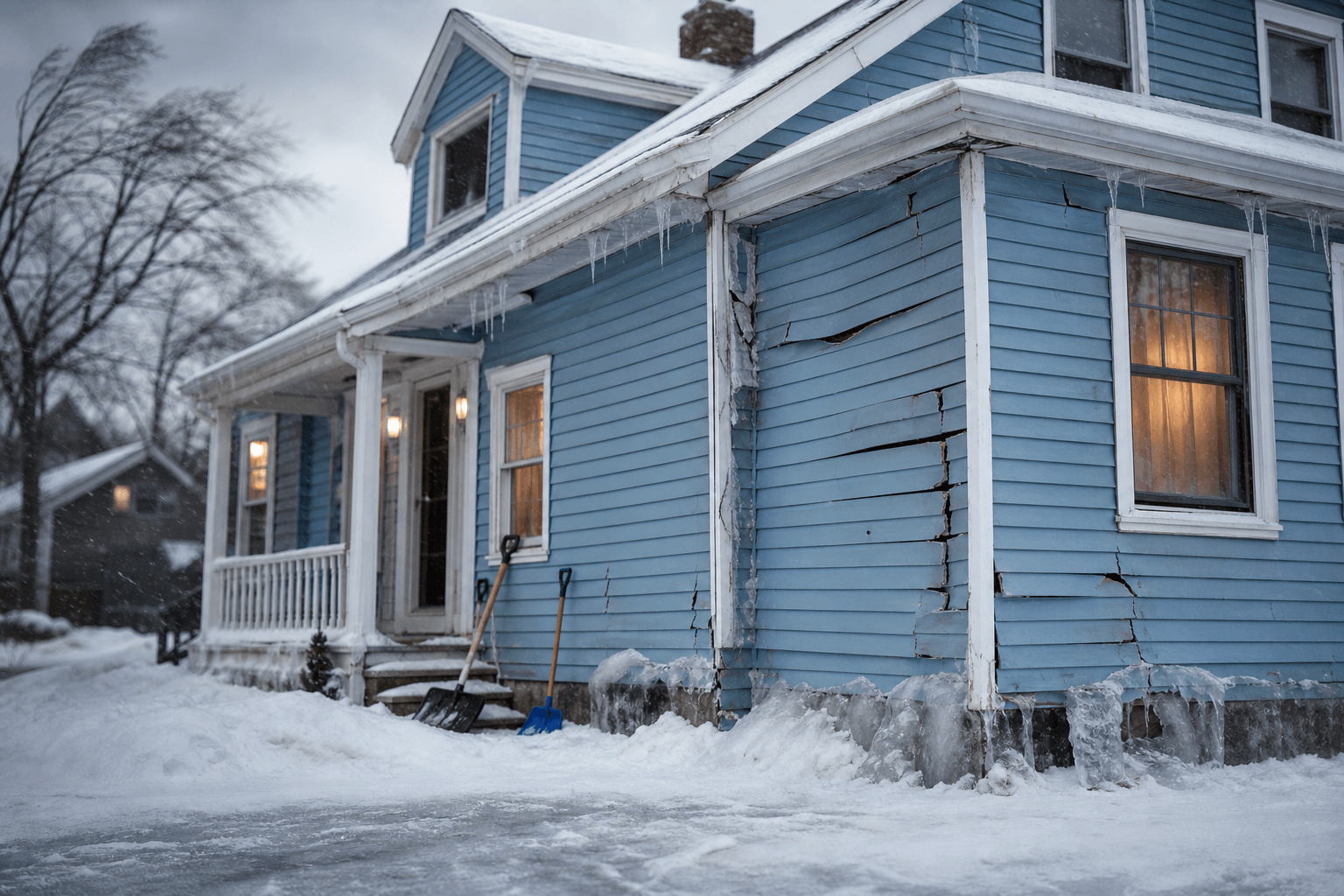
- Ice buildup concentrated in one specific spot along the roofline in winter
If you're seeing any of these, it's worth having someone look specifically at the flashing, not just the shingles.
Does Flashing Affect My Roof Warranty?
Yes, and the effect can be serious. Manufacturer warranties, including GAF's, don't evaluate flashing on its own. They grade your entire roof system as a pass or fail, and flashing is part of that system. Improperly installed or omitted flashing is one of the most common reasons a warranty claim gets denied, because it's treated as a workmanship issue, not a material defect — and workmanship issues aren't covered.
What Does Flashing Repair or Replacement Cost?
For an isolated repair, say, re-flashing a single vent or pipe, you're typically looking at somewhere in the $1,000 - $1,400 range. That covers the material, labor, and the fact that most of the work happens on a small, defined section of the roof.
For a chimney reflashing, you're typically looking at somewhere in the $2,400–$3,000 range. The jump in price comes down to the amount of work involved. A vent or pipe is one small penetration with a single boot. A chimney has four sides, and each one needs its own service, step flashing woven into the shingle courses up both slopes, an apron at the front, and a saddle or cricket at the back to divert water around it.
On top of that, chimney work is a two-part system. The step flashing ties into the roof, and the counter flashing has to be cut into the mortar joints and folded over the top. That's masonry work, not just roofing work, and it takes time to do right. Caulking flashing to the face of the brick is faster and cheaper, but it fails in a few years and you end up paying twice.
Price also depends on the chimney size, how many courses of brick are involved, whether the crown or mortar needs attention while we're up there, and how steep the roof is.
A few things push that number up or down:
- Flashing material — copper costs more upfront than aluminum or steel, but it also lasts longer and holds up better in coastal or high-moisture areas. Steel and aluminum are more budget-friendly and still perform well in most New England conditions.
- Roof pitch and access — a steep roof or one with limited access (tight property lines, multiple stories) takes more time and safety equipment, which adds to labor cost.
- Condition of the surrounding shingles — if the shingles around the flashing are also worn or damaged, that's additional tear-off and replacement, not just a flashing swap.
One more thing worth knowing: if a quote for flashing repair comes in far below $1,000 or far above $4,000, it's worth asking a few more questions before signing off.
A price that's too low often means shortcuts, reusing old flashing, skipping proper underlayment, or not addressing the shingles around it. An unusually high price may mean you're being quoted for more work than the situation actually calls for. Either way, a second opinion costs you nothing and can save you from paying for the wrong fix.
What to Do If You Suspect a Flashing Problem
Left unaddressed, a small flashing gap doesn't stay small. It usually shows up later as a ceiling stain, rotted decking, or a warranty claim that gets denied because the issue was classified as workmanship instead of a material defect.
You don't need to become a roofing expert to make a good decision here. You just need to ask direct questions: what kind of flashing, where, why, and how it's being installed, and expect a straight answer. If you're already seeing signs of a leak near a chimney, valley, or wall intersection, that's the moment to get it looked at, not wait for the next storm.
At Adam Quenneville Roofing & Siding, flashing is a standard part of every inspection we do, not an upsell tacked on afterward. As a GAF-certified contractor, that's built into how we inspect every roof, because a leak at the flashing isn't a shingle problem and it shouldn't be treated like one.
Asking direct questions is just one way to make sure you're selecting the right roofing contractor. We wrote an article that details what to look into before hiring a contractor, so you can avoid common mistakes, you can find that here.
If you want a second set of eyes on flashing from a past job, or a full inspection, we're happy to take a look.
Schedule a Free Roof Inspection
Christopher Pittsinger, Repair & Service Manager
Chris has been part of the AQRS team for many years—continually sharpening his craft and helping raise the bar for everyone around him. He’s known for coaching our crews on new techniques and best practices so jobs get done the right way, not the fast way. Chris is also a certified Velux installer, which means homeowners can feel confident their skylight repairs and replacements are handled with real expertise.