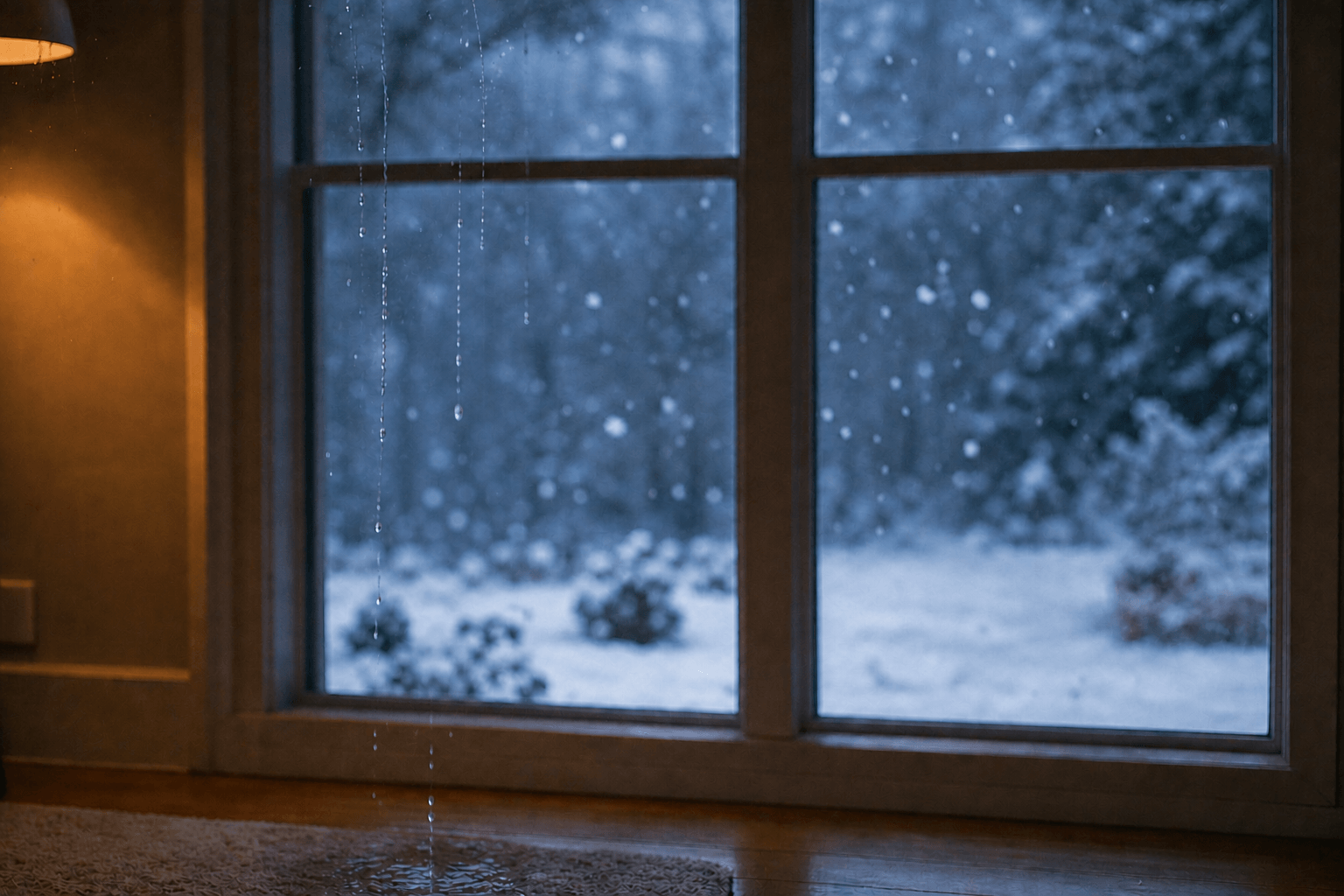
Fall has a way of making small problems look harmless. A loose shingle, a gutter that overflows in one spot, or a faint stain in the attic doesn't feel urgent when it's 60 degrees out.
Add snow, ice, and repeated freeze-thaw cycles, though, and small problems can become expensive ones. So how do you know whether your roof is actually ready?
At Adam Quenneville Roofing & Siding, we spend every spring looking at what winter did to roofs across New England. In this article, we'll walk you through the seven questions homeowners ask most before the first snow, what you can check safely yourself, and what you can honestly leave alone. We'll also sort winter roof problems into three groups: what can wait, what to schedule soon, and what shouldn't wait at all.
We're a roofing company, so yes, we have an interest in this topic. Here's our promise: most roofs heading into winter don't need work, and plenty of the things homeowners worry about are cosmetic. We'll tell you where that's the case, and we'll also tell you where it isn't.
One safety rule too: you don't need to climb onto your roof to do any of this. Wet leaves, frost, and steep pitches are a bad combination. Everything below can be checked from the ground, a ladder-free window, or your attic.
1. Are missing, cracked, or curling shingles a problem before winter?
It depends on how many, where, and how old your roof is.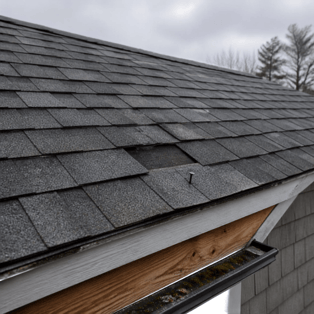
From the ground (you can use your cell phone camera and zoom in for a better look), look for shingles that are missing entirely, cracked across the surface, or curled up at the edges.
A few granules in your gutters is normal on an aging roof. A bare patch where a shingle used to be is not, because the underlayment below it was never meant to be exposed to a New England winter.
One slightly lifted shingle with no sign of water getting in usually isn't an emergency. Widespread curling or cracking across a roof that's approaching the end of its life is a different story, and it's worth a professional opinion on whether repairs make sense or you're nearing replacement.
2. Should I worry about roof flashing before winter?
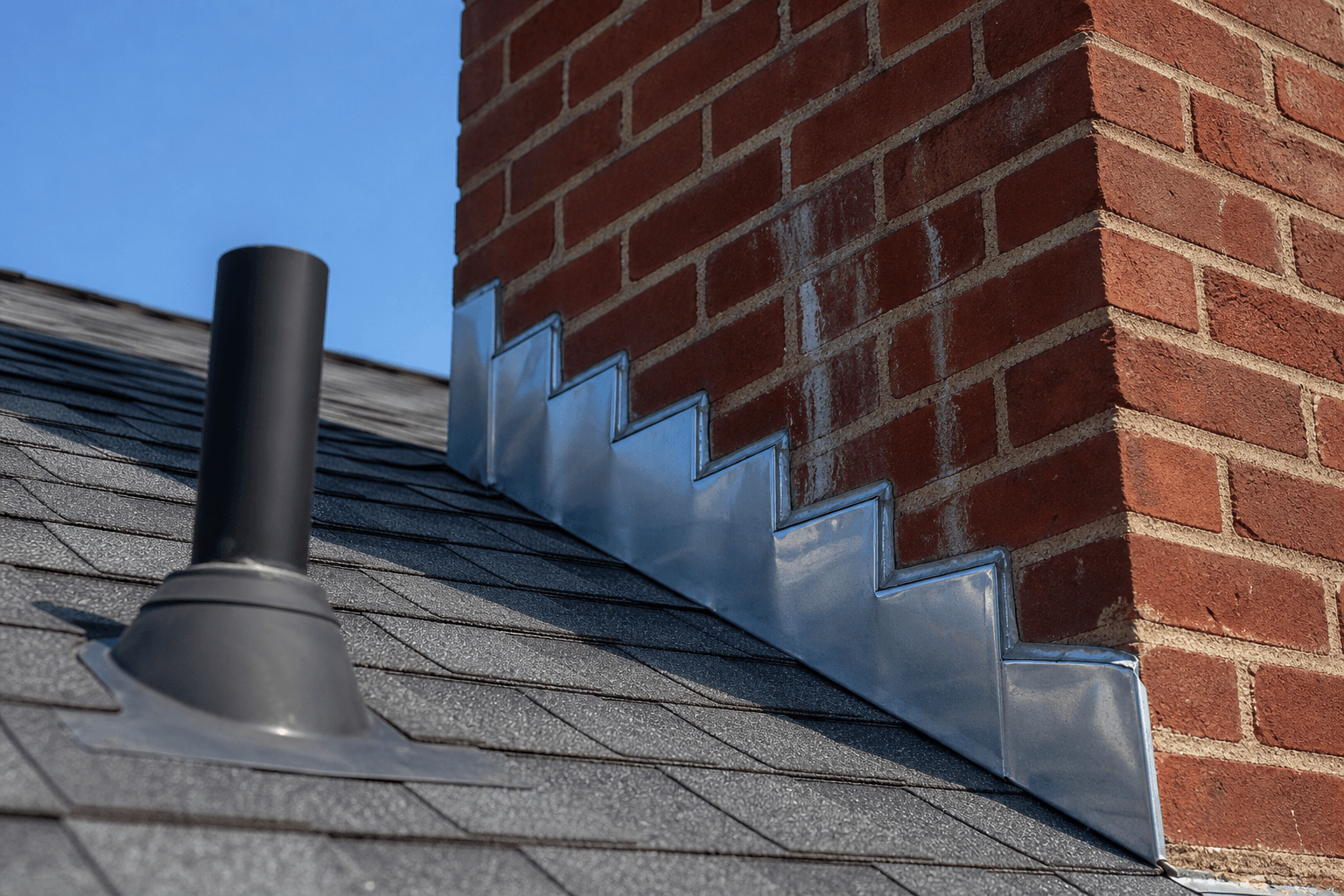
Yes, more than most homeowners expect. Flashing is the thin metal (or sealant) that seals the spots where your roof meets something else: chimneys, skylights, plumbing vents, and walls. Those transitions are among the most common places roofs leak, because water naturally finds the gap.
From the ground, look for flashing that appears lifted, bent, rusted, or pulled away from the surface, and for dried or cracked caulking around a chimney or skylight. Pipe boots, the rubber collars around plumbing vents, are another frequent culprit. The rubber can crack with age even when the shingles around it look fine.
Flashing problems are cheap to fix compared to what happens when winter water works behind them, so this is one of the better things to catch in the fall.
3. Is moss or algae on my roof dangerous during the winter?
Usually, the dark streaks you see are algae, and they're mostly a cosmetic issue. They make a roof look older than it is, but they don't mean the roof is failing.
Moss is different. It holds moisture against the shingles, and it can lift the edges of shingles over time. Thick moss that stays wet through freezing temperatures is worth addressing. A light, scattered patch on a shaded section is less urgent.
So ask yourself: is it ugly, or is it holding water? Ugly can wait. If you want it cleaned for appearance, that's your call, and we won't tell you your roof is in danger when it isn't. If moss is thick or the shingles underneath look lifted or deteriorated, have someone take a look first, since the right fix depends on the condition of the roof.
4. Do I really need to clean my gutters before winter?
The goal isn't spotless gutters. The goal is getting water away from your roof edge and your foundation.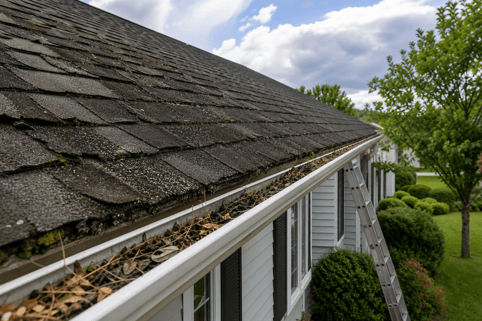
When gutters clog, water overflows or backs up, then freezes. That can add weight and strain to the gutters, and ice buildup at the roof edge can push water under shingles. After the leaves have dropped, check that water flows freely through the gutters and out the downspouts, that nothing is sagging or pulling away from the fascia, and that downspouts discharge away from the house.
If your older gutters are still draining correctly, you don't need to replace them. If one spot overflows every time it rains, that's worth investigating before the first freeze, since it's often a clog, a pitch problem, or a sagging section.
5. What should I look for in my attic before winter?
Your attic may tell you more about your roof than the roof itself. If you can get up there safely, bring a flashlight and look for:
- Water stains or dark marks on the underside of the roof deck, especially around chimneys, vents, and valleys
- Damp, compressed, or discolored insulation
- Daylight coming through the roof boards
- Frost, condensation, or a musty smell, which can point to ventilation or moisture problems
- Signs of old leaks: rings, rusty nail tips, or dark, stained wood
An old stain that's dry doesn't always mean an active leak, but it does tell you water got in at some point. Condensation and ventilation problems can look like a leak without being one, which is why it helps to have someone read the clues correctly rather than assuming the worst.
6. If my roof leaked last winter but stopped, do I still need to fix it?
Probably worth investigating. A leak that stops doesn't necessarily mean the cause went away. Often it means  the weather changed: the snow melted, the ice dam thawed, or the wind direction shifted. The opening that let water in is still there, and the next freeze-thaw cycle can bring it back.
If you had a leak and never found the source, now is the time to look, not after the first storm. Start with the attic checks above, and note whether the leak showed up during snowmelt, heavy rain, or ice buildup. That detail helps narrow down whether the cause was flashing, a damaged shingle, an ice dam, or something else.
7. Do I need a roof inspection before every winter?
Honestly, no. Most homeowners don't need a professional inspection every single fall. If your roof is in decent shape, you've walked through the checks above, and nothing looks off, you're probably fine.
We'd suggest having a roofer take a look if:
- Your roof is older and approaching the end of its expected life
- You've had a leak, even one that stopped
- You've had storm or wind damage recently
- You can see visible damage from the ground
- You've had ice dams more than once
If none of those apply, spend your time on the checklist and save the money.
What winter roof problems can wait, and what shouldn't?
The question under all of this is, "Okay, but how worried should I be?" Here's a simple way to sort it.
Usually not an emergency
- Minor discoloration or cosmetic algae staining
- One slightly lifted shingle with no sign of leaking
- Older gutters that are still draining correctly
Worth scheduling before winter
- Missing shingles
- Visibly damaged or lifted flashing
- Gutters that overflow repeatedly or are pulling loose
- Small attic stains
- Cracked or damaged pipe boots
Don't wait
- Active leaks or wet insulation
- Sagging roof decking
- Significant areas of missing roofing
- Water entering around a chimney or skylight
- Any obvious structural movement
If you see something in the last group, call a roofer promptly, and if there's any sign of structural movement, treat it as a safety issue first.
So, will your roof make it through the winter?
For many homeowners, the answer is yes, as long as nothing on the "schedule it" or "don't wait" lists applies. Most of the worry around winter roofs comes from not knowing what you're looking at, and a few ground-level and attic checks clear most of that up.
Remember to check shingles, flashing, moss, gutters, and your attic. Take last winter's leak seriously even if it stopped. And remember that an annual professional inspection isn't necessary for every roof.
Not sure what you're looking at? You don't need to climb onto your roof to prepare for winter. Start with our free Winter Home Prep Checklist to walk through the areas you can safely inspect from the ground and inside your home. Download the checklist (no email required).
If you spot something that concerns you, Adam Quenneville Roofing & Siding can inspect your roof and help you decide whether it needs attention now, can wait until spring, or doesn't need repair at all. Reach out to our team to set that up. We'd rather you walk into winter with a clear picture of your roof than a pushy sales pitch.