
Most New England roofs survive winter just fine. But some don't, and the ones that rarely make it obvious.
There's no alarm. No dramatic moment. Just a slow drip that started somewhere in January, a section of flashing that shifted a little more each freeze, a few inches of ice that sat long enough to work its way under a shingle edge.
By the time spring arrives, the damage is already done. The only question is whether you find it now, or later, when it's bigger.
You're not alone. Every spring, New England homeowners face the same question, and the honest answer is that winter can do a lot of quiet damage to a roof that isn't always visible from the driveway.
At Adam Quenneville Roofing & Siding, we inspect roofs across New England every year as winter finally lets go. And we'll tell you what we've learned: the homes that fare the worst aren't always the ones with the oldest shingles or the biggest storms. They're the ones where small problems went unnoticed for one more season.
We've seen ice dams quietly separate flashing from chimneys. We've found saturated decking hidden under shingles that looked fine from the street. We've watched gutters pull away from fascia boards not from one bad storm, but from the slow, steady weight of ice built up over months.
That kind of damage doesn't announce itself. It accumulates.
We're not sharing this to alarm you. We're sharing it because after inspecting hundreds of roofs across the region, we know what to look for, and we want you to know it too. Because the homeowners who catch problems early almost always spend less, stress less, and protect their home better.
In this article, we'll walk you through exactly what happens to a roof during a New England winter, the specific warning signs to look for once the snow clears, what you can safely check yourself, and when it's time to call a professional.By the end, you'll have a clear picture of where your roof stands and what to do next.
What a New England Winter Actually Does to a Roof
Most homeowners think of winter roof damage as something dramatic: a branch falls, a leak appears, a shingle flies off in a storm. And yes, that happens.
But the more common story is quieter. It's the cumulative stress of four or five months of freeze, thaw, snow, ice, and wind that slowly weakens materials and compromises the system over time.
Here's what your roof is actually dealing with every winter.
Freeze-Thaw Cycles Break Down Shingles from the Inside Out
New England winters don't stay cold. Temperatures swing above and below freezing dozens of times between November and March, and that repetition takes a toll.
When moisture gets into small cracks in shingles, around flashing, or beneath roofing materials, it freezes and expands. When it thaws, it contracts. Do that enough times and seals break, materials crack, and the roof's ability to shed water starts to weaken.
This isn't always dramatic. You won't always see a big split or crack. But you'll see the effects: shingles that have lifted slightly, flashing that has pulled away, or sealant that has cracked and dried out.
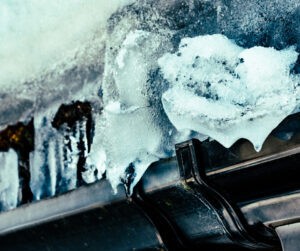
Ice Dams Can Force Water Where It Doesn't Belong
Ice dams form when heat escapes through your attic, warms the roof deck, and melts the snow above it. That meltwater runs down toward the colder eaves and refreezes, creating a ridge of ice at the edge of the roof.
When more snow melts above that ice dam, the water has nowhere to go. It backs up under the shingles, and that's when leaks happen inside the home.
Ice dams don't always cause leaks during the winter. Sometimes the damage only becomes visible in the spring, when you start seeing water stains on ceilings, peeling paint near exterior walls, or moisture in the attic.
Heavy Snow Loads Put Stress on the Entire Structure
A cubic foot of wet, heavy New England snow can weigh 20 pounds or more. When that accumulates across a roof for days or weeks, the structure is under sustained stress that it may not have been designed to handle long-term.
Most roofs are built to carry snow loads, but roofs that already have underlying structural issues, damaged decking, or aging materials can show wear more quickly. Older or compromised roofs are more vulnerable to this stress.
Wind Lifts, Loosens, and Unseals
Even a storm that doesn't bring visible damage can loosen things that were already weak. High winds in late winter and early spring lift shingle edges, break sealant bonds, and rattle flashing that may have already been compromised.
The wind doesn't always take shingles off completely. More often, it partially lifts them, enough to create an entry point for water without being obvious from the ground.
Spring Warning Signs Every New England Homeowner Should Look For
Spring is the right time to assess your roof because the stress is over, the snow is gone, and any damage that occurred is now visible, if you know what to look for.
You don't need to get on the roof to spot most of these signs. A careful walk around the house and a look inside can tell you a lot.
Shingles That Are Missing, Lifted, or Curling
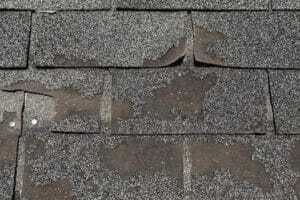
Stand back from your home and scan the roof surface for shingles that are no longer lying flat. Lifted or curling shingles are a clear indicator that the seal strips have failed or the shingles have aged past the point where they can protect the roof properly.
Missing shingles are easy to spot. Lifted or creased ones require a closer look; binoculars can help if you don't want to climb a ladder.
Granule Loss in Your Gutters or Around Downspouts
Asphalt shingles are coated in granules that protect the material from UV damage and help shed water. Over time, and especially after a rough winter, those granules begin to loosen and wash off.
After a heavy rain in spring, check your gutters and downspouts. If you're seeing what looks like coarse black sand or gravel, that's granule runoff. A small amount is normal. A significant amount suggests the shingles are worn and losing their protective coating.
Flashing That Has Lifted, Separated, or Corroded
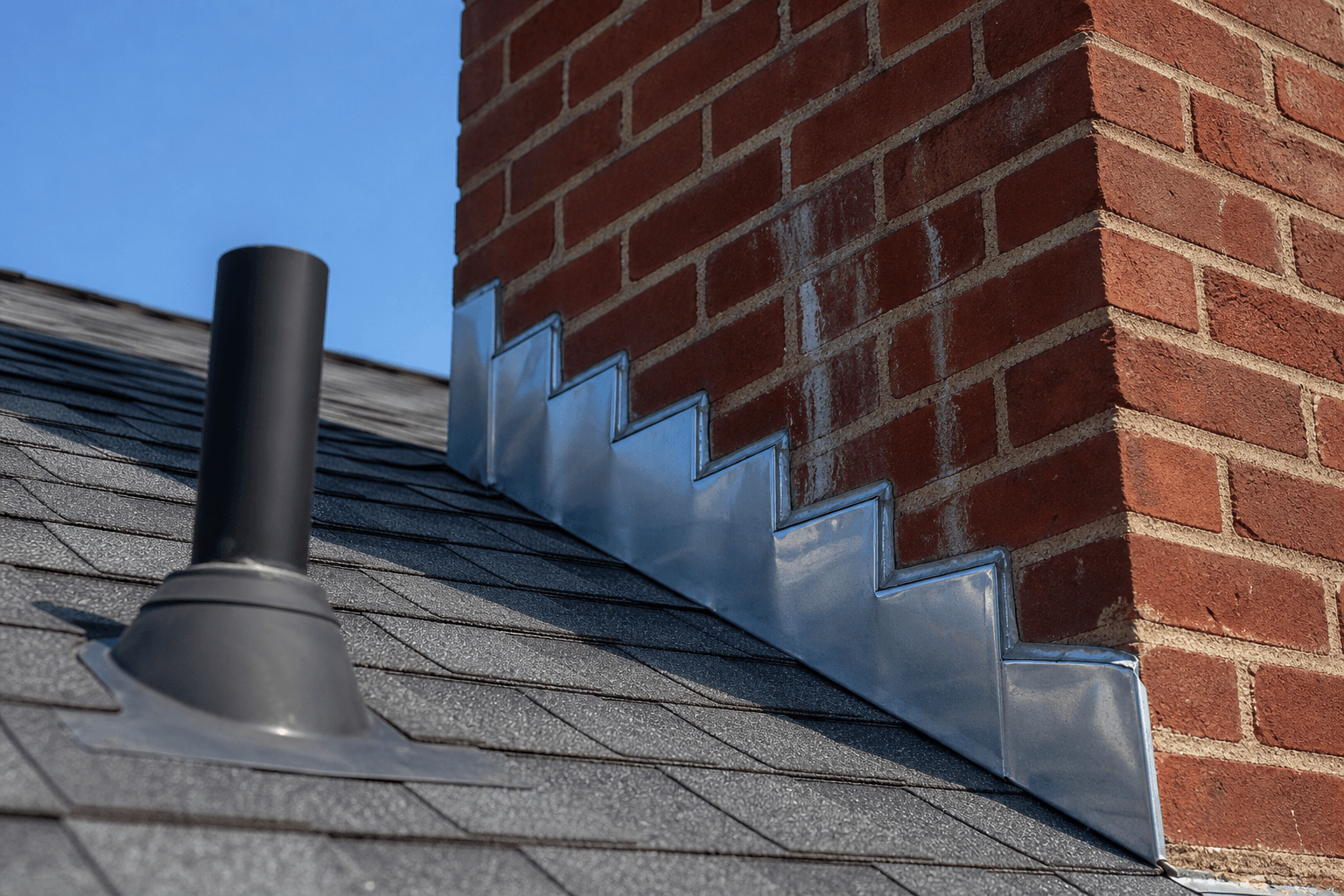
Flashing is the metal material that seals the joints on your roof, around chimneys, skylights, vents, and where the roof meets a wall. It's also one of the first places to show winter damage.
Freeze-thaw cycles pull at the sealant that holds flashing in place. If you can see daylight or gaps around your chimney base, or if the metal looks lifted or bubbled, that's worth addressing before the spring rain season starts.
Soft Spots, Sagging, or Visible Dips in the Roof Deck
If any section of your roof appears to dip, bow, or sag when you're looking at it from the ground, do not get on the roof to investigate. This is exactly the kind of situation that should stay in a professional's hands.
Visible sagging or dipping can indicate that moisture has penetrated the decking beneath the shingles, and if the decking is soft or rotted, the surface may not support weight safely.
This is one of the more serious issues a roof can have. Damaged decking affects the structural integrity of the entire roof system, not just the shingles on top of it. If you notice it, flag it for a professional inspection and leave the closer look to someone with the right training and equipment to assess it safely.
Water Stains on Ceilings or Attic Insulation
One of the most reliable signs of winter roof damage isn't on the roof at all; it's inside your home.
Check your attic after the snow melts. Look for water staining on the underside of the roof deck, damp or compressed insulation, or visible biological growth. Also check the ceilings on your top floor, especially near exterior walls or in corners.
Water stains don't always mean an active leak. Sometimes damage from ice damming earlier in the season dried out and is only showing up now as discoloration.
Gutters That Are Sagging, Pulling Away, or Clogged
Gutters take a significant beating through winter. The weight of ice and snow can pull fasteners loose, bend sections, or cause gutters to pull away from the fascia board.
Walk the perimeter of your home and look at whether the gutters are sitting level and secure. Sagging sections hold standing water and create additional weight stress. Gutters that have separated from the fascia will allow water to run behind them, straight into the eaves and siding.
Moss, Algae, or Dark Streaking on the Roof Surface
If you're seeing green moss growth or dark streaking across your shingles, that's a sign of moisture retention, and it tends to accelerate after a wet winter.
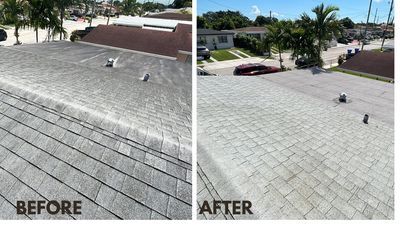
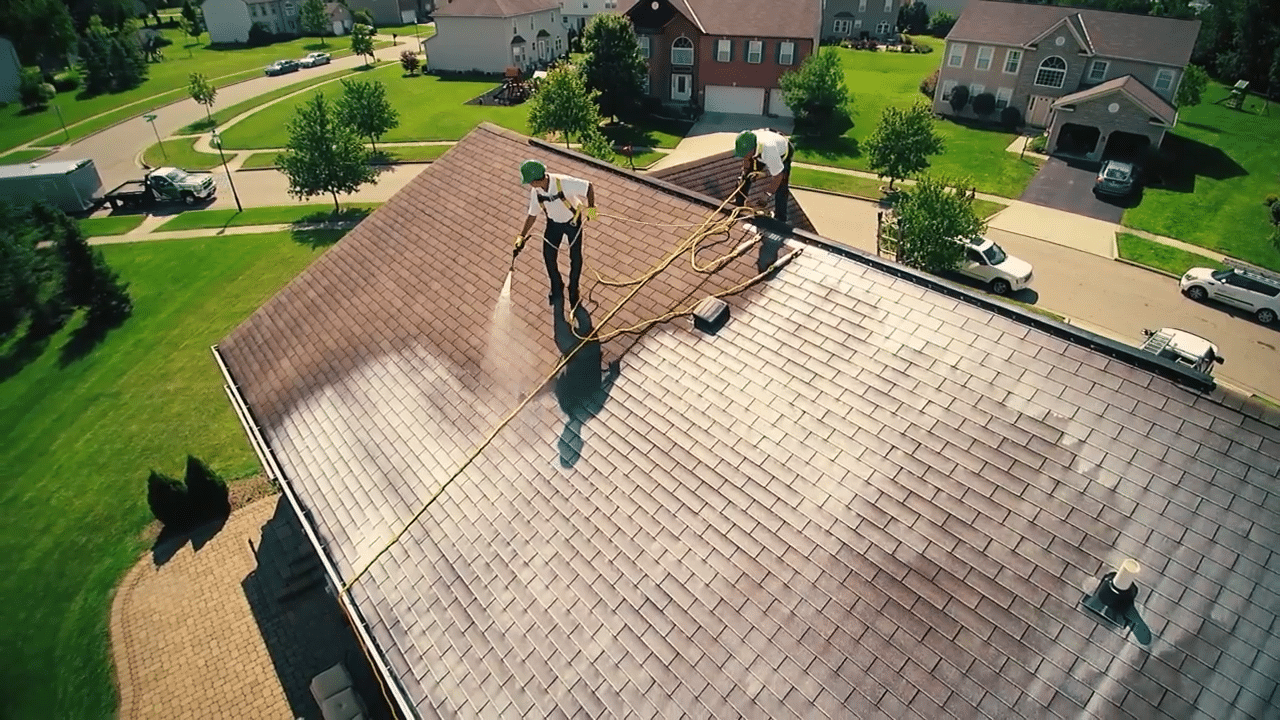
Moss holds moisture against the shingle surface, which speeds up deterioration. It's also a sign that water isn't draining freely off certain sections of the roof. This is worth addressing, not just cosmetically, but because ongoing moisture exposure shortens the life of the shingles significantly.

What You Can Check Yourself and What You Shouldn't
A lot of homeowners want to get on the roof in the spring and take a look around. That's understandable. But there are real safety and accuracy limitations to a DIY inspection, and it's worth knowing where the line is.
What You Can Safely Do From the Ground or From Inside
From the ground with good binoculars or a phone camera, you can spot:
- Missing or visibly damaged shingles
- Sections that look darker or discolored
- Lifted or bent flashing around the chimney
- Gutters that have pulled away or are visibly sagging
- Moss or algae growth
From inside, you can check:
- Attic for water staining, damp insulation, or biological growth
- Top-floor ceilings for discoloration or soft spots
- Around skylights for any signs of moisture or staining
What Requires a Professional Roof Inspection
A trained inspector can identify things that aren't visible to the untrained eye, including:
- The condition of the sealant strips under shingles
- Early-stage decking deterioration
- Flashing that has shifted but isn't visibly separated
- Soft spots that indicate moisture penetration in the roof system
- Ventilation issues that contribute to ice damming
A professional inspection is also the only way to get an accurate assessment of how much useful life your roof has left, and whether what you're seeing is cosmetic or structural.
Why Spring Is the Right Time to Deal With This
Spring inspections aren't just a good idea; they're genuinely the best window of time to assess and address winter roof damage.
Here's why:
The snow is gone, and so is anything hiding underneath it. If winter caused damage, spring is when it shows up.
The weather is cooperative. Moderate temperatures and dry stretches in spring allow for proper roofing work, unlike the unpredictable conditions of fall or winter.
You're ahead of the problem. Spring inspections happen before summer storm season, which means if there's damage, you're addressing it before it gets stressed further.
Lead times are shorter. Roofing contractors are typically busiest in late summer and fall. Spring inspections and projects often come with shorter scheduling windows.
What Happens If You Wait
The most common reason homeowners delay a spring inspection is that nothing obvious has gone wrong, no leaks, no visible damage, no reason for urgency.
The problem with waiting is that roofing damage almost never announces itself dramatically right away. It compounds quietly. A lifted shingle in April becomes a water-damaged deck by July. A small amount of flashing separation in March becomes a ceiling stain by the next ice dam in December.
The cost difference between catching a problem early and addressing it after it has cascaded into interior damage is significant, and the repairs become more disruptive.
So, What Should You Do Now?
If you've made it through another New England winter and you're not sure what shape your roof is in, now is the right time to find out.
Start with what you can see. Walk around your house. Check your gutters. Look at your ceiling and attic. Use the signs listed in this article as your baseline checklist.
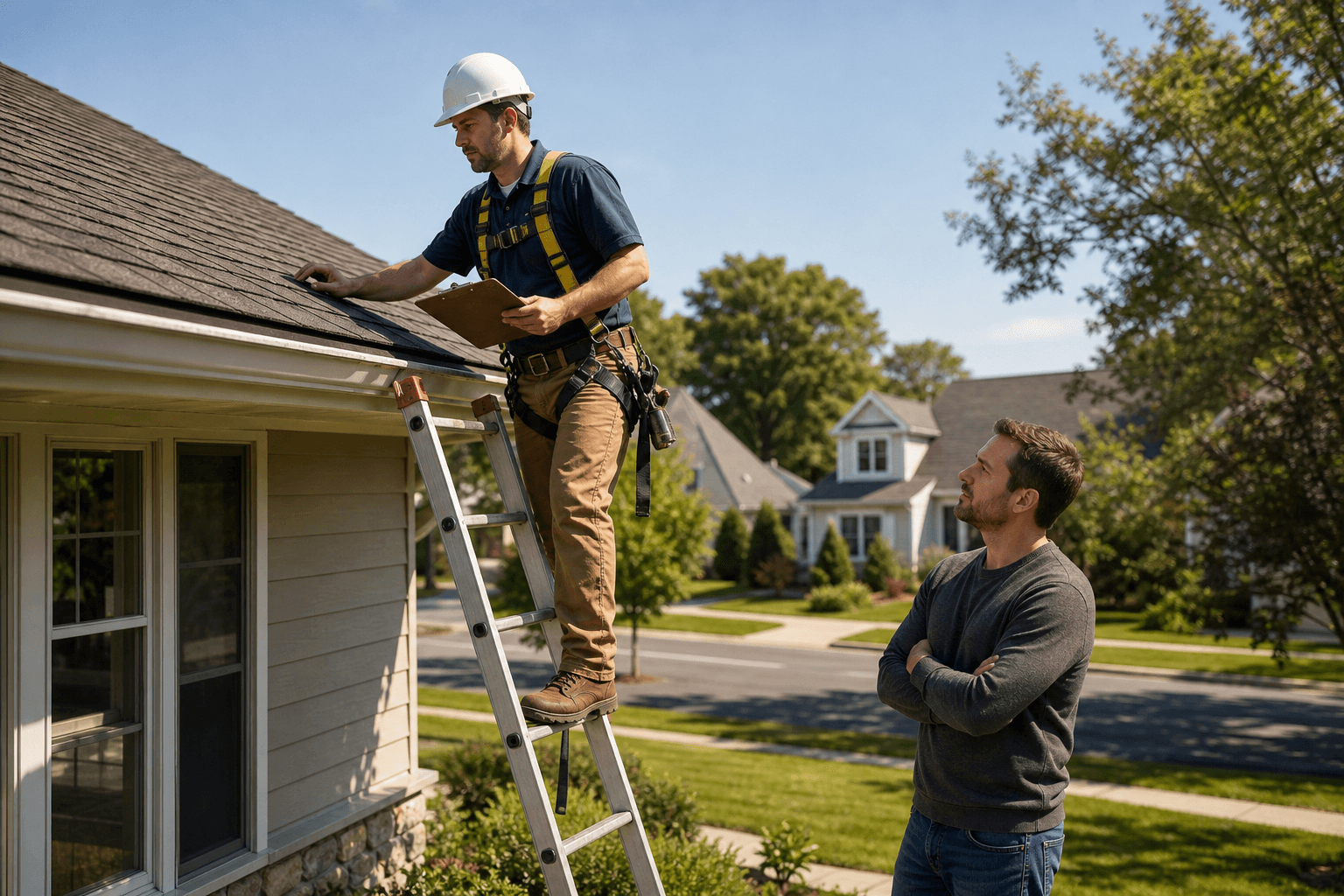
If anything looks off, or if you simply want a professional set of eyes on it before spring storms arrive, a roof inspection from an experienced contractor will give you a clear, honest assessment of your roof's current condition.
At Adam Quenneville Roofing & Siding, we inspect roofs across New England every spring. We'll tell you exactly what we find, what needs attention now, what can wait, and what looks good. No pressure, no upsell, just an honest look at what you're working with.
Schedule your spring roof inspection with AQRS today.
Have a specific question about what you're seeing on your roof? Contact us at (413) 536-5955, and we'll help you figure out what it means.
Topics: