What is Roof Maxx and How Does It Work?

Wondering if Roof Maxx is a legitimate alternative to a roof replacement? We explain how it works, what it costs, and what it cannot fix.
Table of Contents
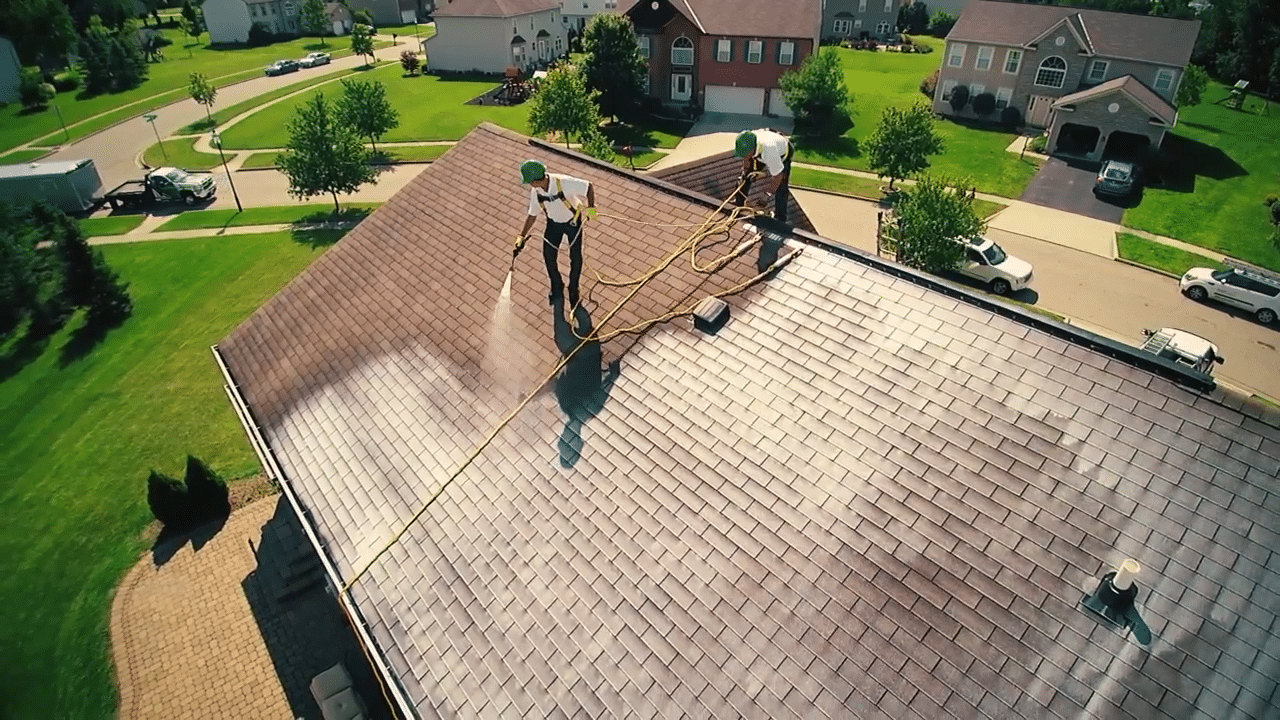
roof maxx application screenshot

Staring up at an aging, granule-shedding roof is one of the more stressful experiences a homeowner can have. A full roof replacement is expensive — often tens of thousands of dollars, and you’re left wondering if there’s any legitimate way to extend the life of your current roof without simply throwing money at a problem that will come back in a few years anyway.

At Adam Quenneville Roofing and Siding, we are an authorized Roof Maxx dealer, so yes, we have a financial interest in this product. We are telling you that upfront because we think it matters. Homeowners ask us regularly whether Roof Maxx is a real solution or just a marketing gimmick, and that is exactly the kind of question we want to answer honestly, not sidestep.

In this article, we are going to explain exactly what Roof Maxx is, the science behind how it works, what it genuinely can and cannot do, and how to know whether it is the right fit for your roof. By the end, you will have everything you need to make an informed decision.

roof maxx logo

What Exactly is Roof Maxx?

To understand what Roof Maxx does, you first need to understand what happens to asphalt shingles as they age.

In simple terms, Roof Maxx is designed to restore the flexibility that aging shingles lose over time.

When asphalt shingles are manufactured, they are saturated with petrochemical oils. These oils are what give the shingles their flexibility, the ability to expand in summer heat and contract in winter cold without cracking. Over time, constant exposure to UV radiation, rain, and temperature swings causes those oils to evaporate. As the oils deplete, the shingles become stiff and brittle. They start losing their protective granule coating, and they become much more vulnerable to cracking, breaking, and ultimately failing.

Roof Maxx is a spray-on, plant-based roof rejuvenation treatment designed to reverse this process. Its active ingredient is a Soy Methyl Ester Emulsion (SMEE), a 100% plant-based, non-toxic oil. This is the same type of plant-based oil technology used in award-winning Goodyear tires. Rather than sitting on top of the shingles like a paint or coating, Roof Maxx is formulated to penetrate directly into the asphalt core of the shingle and restore the oils that have been lost to weathering.
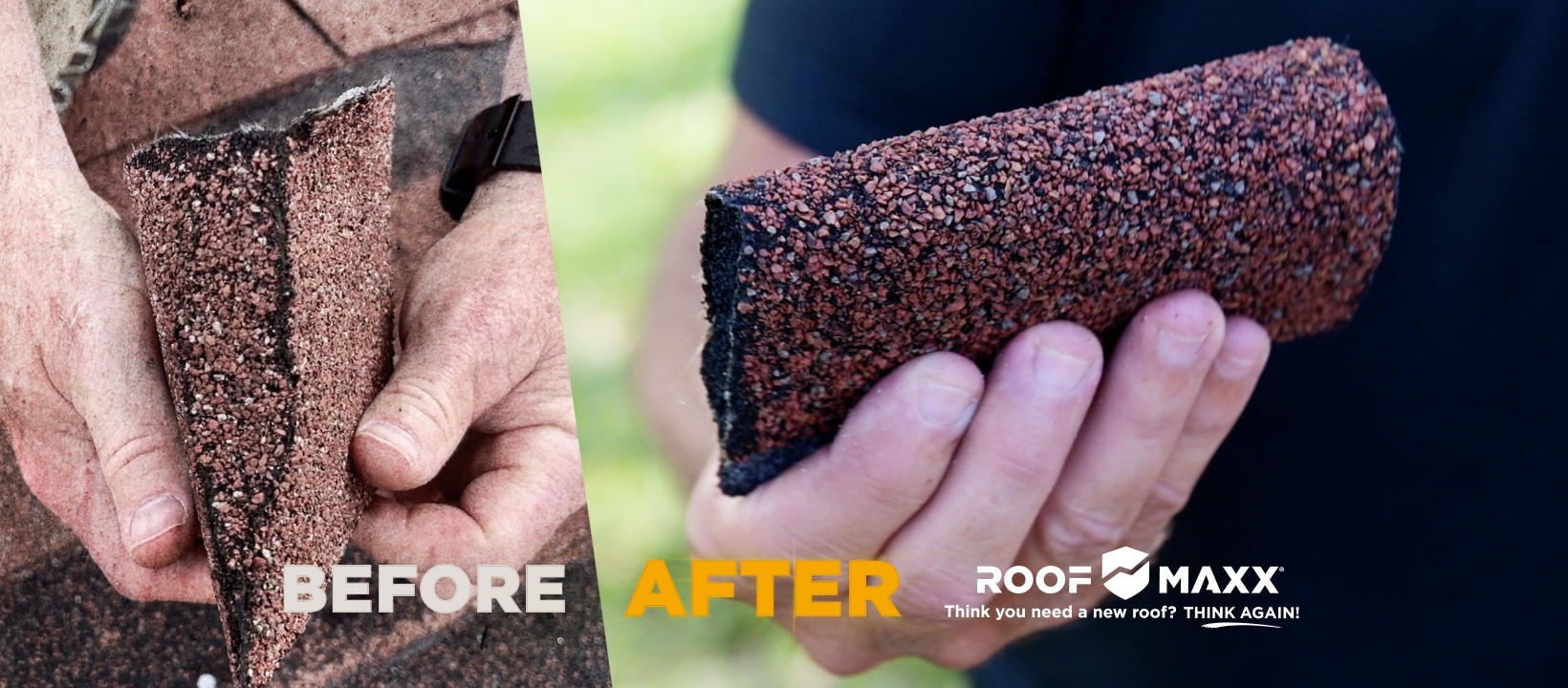
roofmaxx shingle before and afterHow Does Roof Maxx Actually Work? The Science Behind the Spray

The science behind Roof Maxx is straightforward: it replaces what time and weather have taken away.

Shingle Penetration and Flexibility Restoration

When the treatment is applied, millions of microscopic oil beads soak through the granular surface of the shingle and into the asphalt layer beneath. This absorption process takes approximately 30 minutes. Once the oil is fully absorbed, the asphalt is rehydrated, and the shingle regains much of its original flexibility. This renewed flexibility is what allows the shingle to handle the expansion and contraction of seasonal temperature changes without cracking or breaking apart.

How Roof Maxx Improves Weather Resistance

Independent laboratory testing has validated several specific performance improvements in Roof Maxx-treated shingles.

Performance Category Result in Treated Shingles
Water Vapor Resistance
Significant decrease in moisture penetration
Hail impact resistance
24% smaller hail depression size vs untreated shingles
Fire resistance
Maintained ASTM E108 Class A rating (highest possible)

In practical terms, treated shingles hold up better against the things that shorten a roof’s life, water getting in, impact from storms, and the slow breakdown that comes from years of exposure.

The fire resistance result is worth highlighting specifically, because it is a common concern. Roof Maxx does not increase fire risk. In independent testing, treated shingles met the highest fire resistance standard available. Untreated, aging shingles in the same test failed.

How Does The Roof Maxx Application Process Work?

One of the most appealing aspects of Roof Maxx is how fast and non-disruptive the process is compared to a full roof replacement.

Step 1 — The On-Site Roof Assessment

This is the most important step, and it is one that should not be skipped. Not every roof is a candidate for Roof Maxx. One of our qualified project consultants will inspect your roof in person to determine whether the shingles are still structurally intact enough to benefit from the treatment. If the shingles are severely deteriorated, the treatment will not be effective, and a full replacement is the only responsible recommendation.
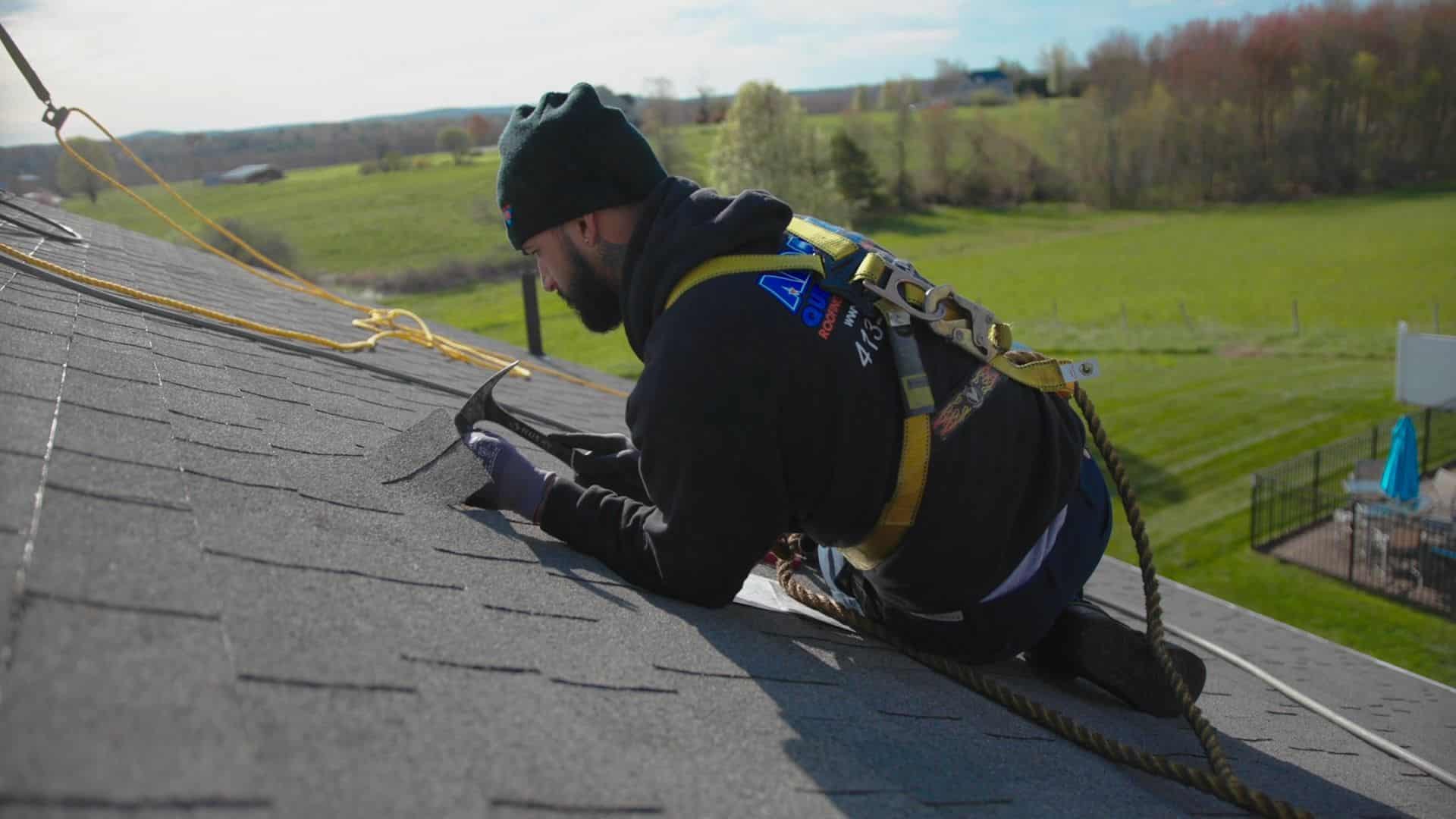
Residential Roof Tune UpStep 2 — The Roof Tune-Up

Before the Roof Maxx treatment is applied, our technicians perform a comprehensive “tune-up” to address minor issues and vulnerabilities on your roof. This step is crucial for ensuring the roof is secure and ready for rejuvenation.

A standard tune-up includes:

  • Banging down any nails that are popping the shingles up.
  • Installing flashing under the hole and adding sealant if any nails have popped entirely through a shingle.
  • Installing flashing under any cracked shingles and adding sealant.
  • Adding sealant to any exposed nails across the roof.
  • Installing sealant around chimney flashing and all other roof perforations.
  • Installing new rubber gaskets over bathroom pipes and sealing them.

Note: Replacing missing shingles or completely replacing chimney flashing is not included in the standard tune-up. These are considered separate repairs and are priced accordingly.

Step 3 — The Application Itself

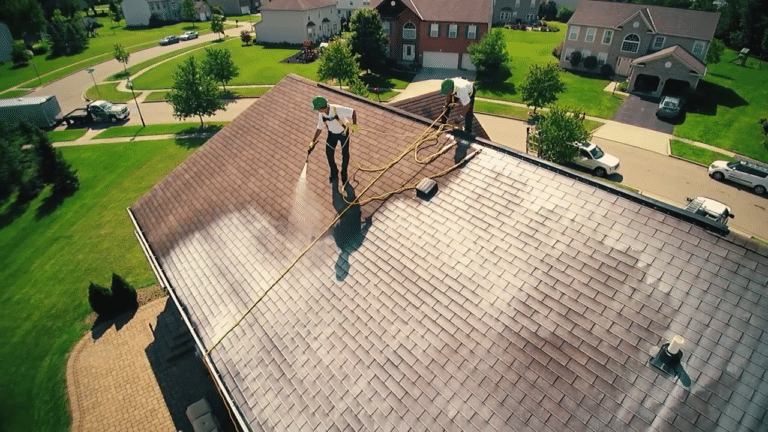
Once the roof is prepped, the Roof Maxx treatment is sprayed evenly across the entire surface. Depending on the size of your roof, the application itself typically takes between 45 minutes and a few hours. Because the treatment absorbs so quickly, rain occurring more than an hour after application will not wash it away or reduce its effectiveness. The application requires dry conditions and temperatures above 36 degrees Fahrenheit for the oil to penetrate properly.
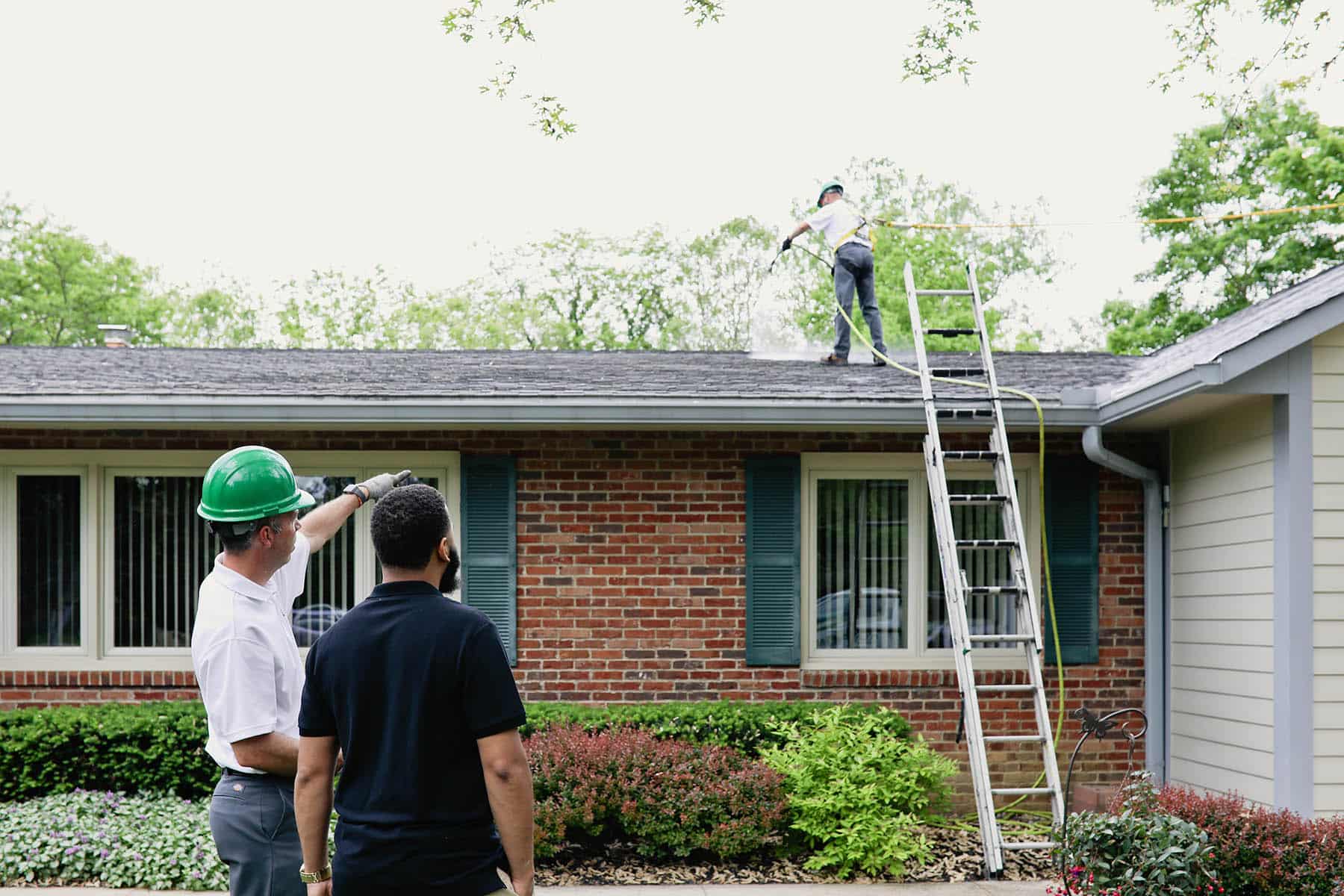

homeowner watching RoofMaxx being applied to their roof

What Are The Limitations Of Roof Maxx?

Any contractor who tells you Roof Maxx can do everything is not being straight with you. Here is what the product genuinely cannot do.

It will not fix an active roof leak. Roof Maxx rejuvenates the shingle material itself, but the vast majority of roof leaks originate at vulnerable points like flashings, chimneys, skylights, and wall intersections, not through the middle of an intact shingle. If you have a leak, it needs to be diagnosed and repaired separately. Applying Roof Maxx over an active leak will not stop the water from coming in.

It will not remove existing algae, biological growth, or moss. Roof Maxx does contain a natural fungicide that helps inhibit future biological growth, but it will not clean off the black streaking, moss, or mildew that is already present on your roof. If your roof needs cleaning, that should be done before the treatment is applied, not after.

It cannot save a structurally failing roof. If your shingles are severely curled, extensively cracked, crumbling, or missing in large sections, the roof has deteriorated beyond what any rejuvenation product can address. In that situation, a full replacement is the only safe and responsible path forward.

This is why a proper inspection matters. Roof Maxx delivers real value, but only on the right roof, at the right time. That assessment has to come first.

How Does Roof Maxx Compare To Things Like Roof Coatings and Sealants?

Roof Maxx is frequently confused with roof coatings and sealants, but they are fundamentally different products.

Coatings and sealants are surface-level products. They are applied on top of the shingles to create a waterproof barrier or a reflective layer. Because they sit on the surface, they are subject to the same expansion and contraction stresses as the shingles themselves, and over time, they can crack, peel, and flake off. They also tend to change the visual appearance of the roof.

Roof Maxx, by contrast, penetrates into the shingle rather than sitting on top of it. It works from the inside out. Because it is fully absorbed, there is nothing on the surface to crack or peel. It also goes on clear, meaning it will not noticeably change the color or appearance of your roof.

Is Roof Maxx Safe for Your Home, Family, and the Environment?

Because Roof Maxx is made from plant-based oils, it is exceptionally safe. It carries the USDA BioPreferred designation, which recognizes it as a bio-based product that reduces dependence on petroleum. It is non-toxic, non-corrosive, and non-flammable. It is safe for people, pets, and the plants around your home.

If any overspray contacts your siding, windows, or landscaping during the application, it can be rinsed off easily with water.

From an environmental standpoint, a study from The Ohio State University found that delaying roof replacement with Roof Maxx significantly reduces roofing material waste and CO₂-equivalent emissions over time.

How Much Does Roof Maxx Cost Compared to a Full Roof Replacement?

The cost difference between a Roof Maxx treatment and a full roof replacement is significant. According to Roof Maxx, a single treatment typically runs up to 80% less than a full replacement, which, for the right roof, is a compelling number.

The honest caveat is that Roof Maxx is not a one-time decision for most homeowners. Treatments are applied every five years, up to three times, for a maximum extension of around 15 years. Spread across multiple applications, the cost advantage narrows, though for most homeowners, it still compares favorably to replacement, especially if the goal is to buy time rather than commit to a full project right now.

Real Life Example

Recently, a customer of ours in Sunderland, Massachusetts, reached out. We applied their initial Roof Maxx treatment, and it performed exactly as promised. Now, six years later, we applied a second treatment, buying them even more time before a full replacement is necessary.

Is Roof Maxx the Right Solution for Your Roof?

Roof Maxx is a scientifically backed, cost-effective solution for a very specific situation: asphalt shingles that are aging and losing their essential oils, but that are still structurally intact and in good condition.

  • If your roof is showing early signs of wear, granule loss in the gutters, shingles that look dry or faded, minor brittleness, and it does not have active leaks or structural damage, Roof Maxx is absolutely worth evaluating. It can meaningfully extend the life of your roof, improve its resistance to weather damage, and save you a significant amount of money compared to an early replacement.
  • If, on the other hand, your roof is actively leaking, covered in biological growth, missing shingles, or showing advanced structural deterioration, a replacement is likely the only safe answer. No rejuvenation product can undo that level of damage.

The best way to know which category your roof falls into is to have it evaluated by a professional who will give you an honest answer, not just the answer that sells the most expensive service.

If you are in New England and want to know whether your roof is a candidate for Roof Maxx, reach out to the team at Adam Quenneville Roofing and Siding. We will inspect your roof, give you our honest assessment, and help you decide whether rejuvenation or replacement is the smarter investment for your home.

Picture of Adam Quenneville Team
Adam Quenneville Team

Trusted Experts in the Field. We’re more than just local roofers; we’re neighbors invested in making our community better, one roof at a time.

With over 27,000 customers and a 5 star score from over 1000 internet reviews, our team’s record speaks for itself. From commercial to residential roofing projects, our expertise is second to none.

Recent Posts
Fall Roof Maintenance Tips
Education

Roofing Contractor Warranties: Why Do Some Advertise 50-Years and Others Only 10?

Confused by 10-year vs. 50-year roof warranties? Here’s the truth: 10-year warranties usually cover workmanship (installation/labor), while “50-year” warranties are typically manufacturer material warranties, often with prorated coverage and fine print. Learn what’s really covered, what can void coverage, and how to compare warranties apples-to-apples before choosing a roofer.

Read More »
AQRS Blog

Adam Quenneville Featured on the Roofing Marketing Pros Podcast

If you’re a homeowner in Western Massachusetts looking for a roofing company you can trust, it helps to hear how reputable contractors think about quality, service, and accountability. Recently, Adam Quenneville was featured on the Roofing Marketing Pros / Contractor Marketing Pros podcast to share how he built a trusted

Read More »
Real 5-Star Reviews

5-Star Reviews on Google!

Listen to our clients, folks just like you, who chose wisely and saved