

Why Does My New Metal Roof Look Wavy?
October 22nd, 2026
4 min read
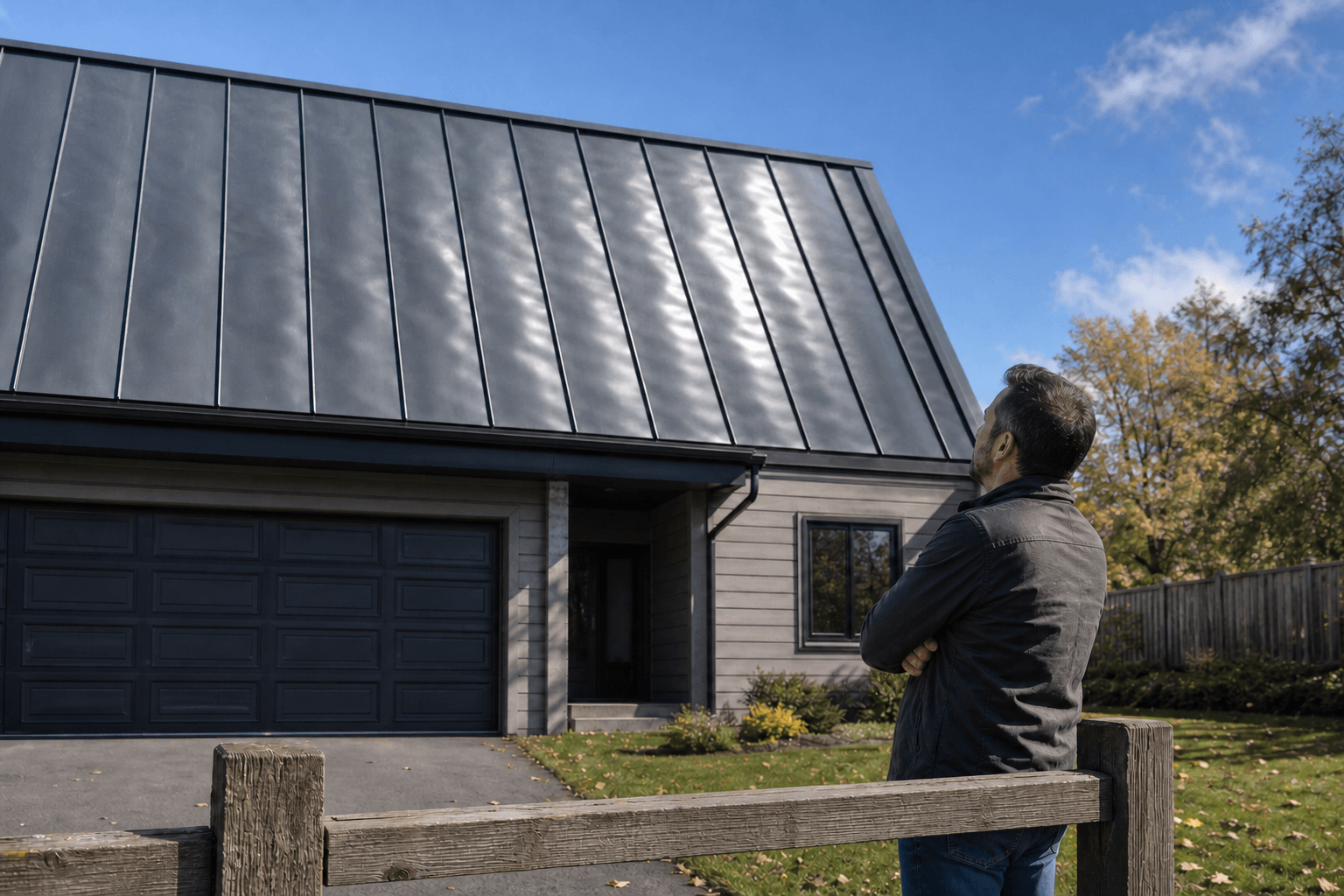
You stood in the driveway after your new metal roof went on, and in the afternoon sun the panels looked rippled. Or you’re about to sign a contract and wondering whether that wavy look you’ve seen on other metal roofs could happen on yours.
Seeing unexpected ripples after a major purchase is frustrating, and it’s natural to wonder if someone made a mistake.
This article explains what causes those ripples, which panel choices make them less visible, and what signs mean it’s time to ask for an assessment.
The short answer: a brand-new metal roof can look wavy because of oil canning, ripples in the flat parts of metal panels that become noticeable in reflected light. It is generally an appearance issue, but waviness can also point to installation or support conditions that deserve a closer look.
At AQRS, we offer metal roofing, but it is not the right choice for every homeowner. If a perfectly smooth appearance from every angle is essential to you, that concern belongs in the conversation before you buy.
What is oil canning on a metal roof?
Oil canning describes an uneven, rippled appearance in a metal panel's flat surface. On a standing-seam roof, you may notice it between the raised seams that run down the roof.
The metal contains stresses introduced during manufacturing, forming, handling, or installation. As those stresses act on a thin, broad surface, the panel can develop slight waviness. Being brand-new does not prevent it.
Oil canning is different from the regular ribs or shallow lines intentionally formed into some panels. Those features are part of the panel design. They can help make irregular waviness less noticeable, although they also change the roof's look.
Why does the same roof look smooth at noon and wavy later?
Light reflects differently from a surface that is not perfectly flat. A change in sunlight or viewing angle can make ripples stand out or nearly disappear.
That is why one photograph may make a roof look very different from another taken later. The Metal Construction Association illustrates this effect with photographs taken at different times and angles.
This distinction matters when comparing roofs. A shaded project photo is not a promise of how your roof will look in direct afternoon sunlight.
Does waviness mean the installer made a mistake?
Not necessarily. Metal manufacturing and forming can introduce stresses before panels reach the jobsite. A correctly installed metal roof can still show oil canning.
However, installation and the surface beneath the panels matter. Potential contributors include:
- An uneven roof deck or misaligned supports.
- Fasteners installed in a way that puts stress on panels.
- Panels forced out of alignment or damaged during handling.
- Connections that restrict the expansion and contraction the system needs.
- Movement in the supporting structure.
The useful question is not simply, “Is that oil canning?” It is, “What is causing the distortion, and does the roof meet the requirements for this system?”
A photo alone cannot settle that. A qualified metal-roofing professional may need to review the panels, supporting surface, installation details, and manufacturer's instructions.
Which metal-roof choices can make waviness less noticeable?
Panel width and profile
Broad, flat panel areas tend to show waviness more readily. Narrower flat sections, ribs, or shallow striations can help break up that surface. Compare the profiles visually: a ribbed panel may address one concern while creating a look you do not prefer.
Metal thickness
Thicker metal can reduce the tendency to oil can, but it cannot compensate for every design or installation issue. Ask for the proposed material and thickness in writing, rather than assuming the most expensive option will look perfectly flat.
Color and finish
Lower-gloss finishes and lighter colors can make waviness less apparent than highly reflective finishes and darker colors. That is a visibility difference, not a guarantee that the panel will have no ripples.
Each choice should be considered within the manufacturer's approved roof system. Ask how alternatives affect the appearance, installed price, and suitability for your home. There is no universal “oil-canning-proof” specification.
What should you ask before buying a metal roof?
Bring these questions to the estimate conversation:
- What does the flat part of this panel look like, and does the profile include ribs or striations?
- Do you have photos of finished roofs with this profile, ideally taken at different times of day?
- How do color and finish affect how visible waviness might be, and what would you suggest if I’m concerned about it?
- How do you prepare and check the roof deck before the panels go on?
A small color chip cannot show the appearance of an entire roof. A mock-up can be useful, but it cannot reproduce every panel, viewing angle, or weather condition.
Be direct about your tolerance. “I like metal, but visible ripples would bother me” is useful information. You may prefer another panel profile or roofing material after seeing the tradeoffs.
What should you do if your new metal roof already looks wavy?
Start by documenting the concern from the ground. Take an overall photo and a closer view, note the date and time, and repeat from the same safe location under different lighting. Keep the original images rather than relying only on heavily zoomed or edited versions.
Contact the installing contractor with the photos and ask for an explanation tied to your specific roof system. Gather the proposal, product information, and warranty documents before that conversation.
Report leaks, opened or displaced seams, or a noticeable sag in the roof itself promptly rather than treating them as ordinary oil canning. These observations do not establish a diagnosis, but they warrant evaluation. Do not climb onto the roof or try to flatten panels yourself.
Frequently asked questions about metal-roof waviness
Will oil canning disappear over time?
Its visibility can change, and some stresses may lessen. Do not base your decision on a promise that the roof will become completely smooth. Ask what is known about your roof and what remains uncertain.
Will replacing the wavy panels fix it?
Not necessarily. Replacement may not solve a problem caused by the supporting surface or another unresolved condition. Establish the cause and proposed remedy before assuming new panels are the answer.
Is oil canning covered by a warranty?
Appearance exclusions and coverage vary. Do not assume waviness is covered, or that an appearance exclusion excuses a separate installation defect. Ask the contractor and manufacturer to explain the applicable written terms for your project.
Make the appearance conversation part of the roofing decision
A wavy-looking metal roof does not automatically mean a failed roof. It does mean you deserve a clear explanation, especially if the appearance was never discussed before installation.
For a future project, compare real examples and decide how much variation you can accept. For an existing roof, gather photos and request a qualified assessment when the cause is unclear or other symptoms are present.
Not ready to schedule anything? Save the three questions above for your next contractor conversation. When you are ready to compare roofing options, contact Adam Quenneville Roofing & Siding with your priorities and questions, including what you expect your new roof to look like.
Robert Croteau, Director of Sales & Finance
With over 25 years at Adam Quenneville Roofing & Siding, Bob brings deep experience across installation, project management, and leadership. GAF Certified- and OSHA-10 certified and trained in finance and operations, he helps homeowners make confident, informed decisions, blending technical know-how with business insight.
