Do Roofers Really Need to Go Into My Attic to Give Me an Estimate?
August 10th, 2026
8 min read
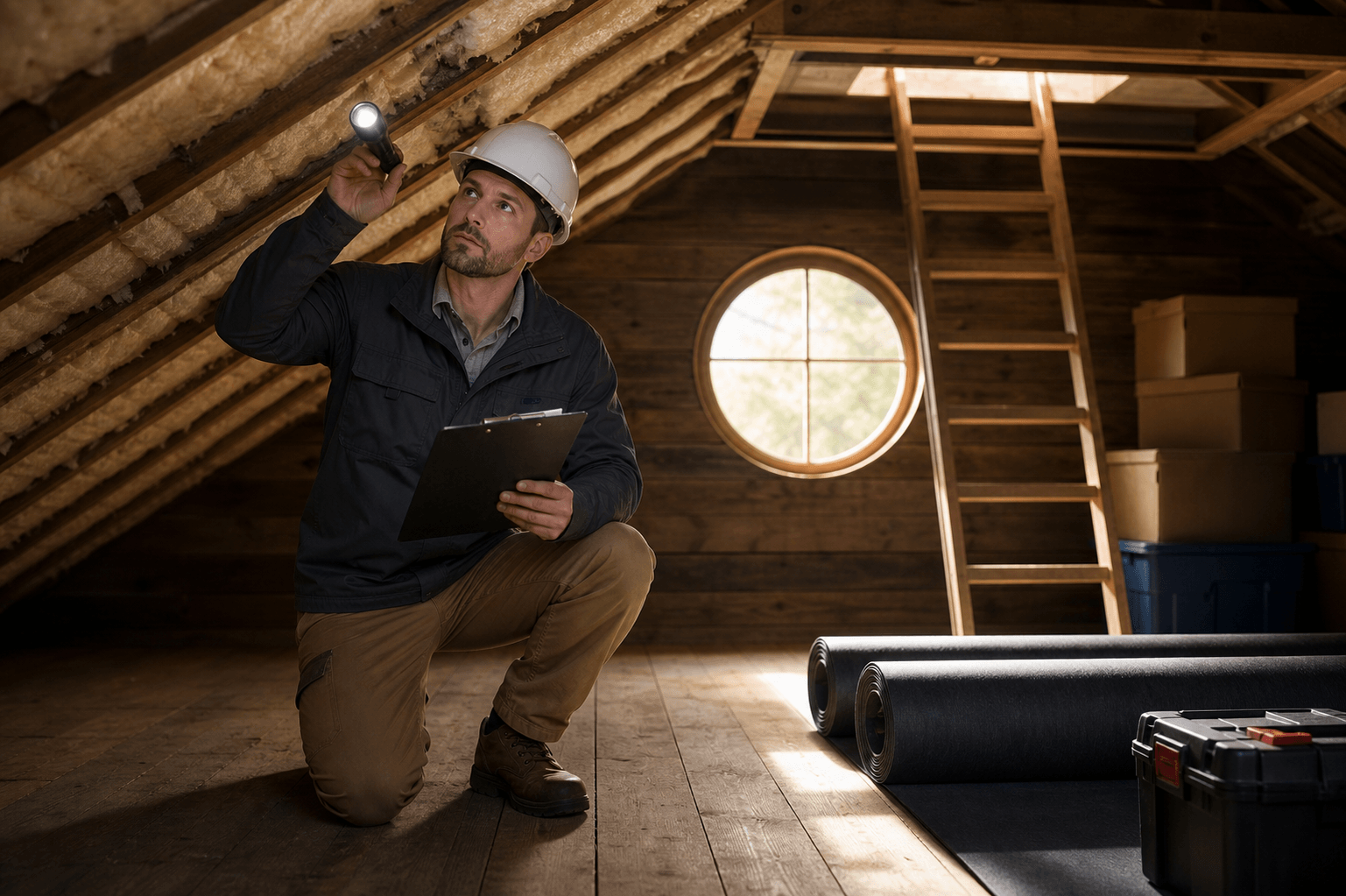
If you’re getting a roof estimate and a contractor says they need to look in your attic, it’s normal to pause. For a lot of homeowners, the attic is a private space. It can be cramped, dusty, and inconvenient to access. And if you’re thinking, “Isn’t the roof on top? Why do you need to come inside?", that's a reasonable question.
The problem is, skipping the attic can lead to the two things homeowners hate most: surprise costs and a roof that still has the same problems after it’s replaced. Ventilation and moisture issues don’t always show up from the outside, but they can shorten roof life, contribute to mold, and even make ice dam problems worse.
Here’s the simple truth: a roof isn’t just shingles. It’s a system. What’s happening underneath the shingles: ventilation, moisture, insulation, and decking condition, can directly impact the price of the job and the long-term performance of the roof.
At Adam Quenneville Roofing and Siding, we include an attic check as part of a proper roof evaluation whenever possible, because what’s happening under the shingles often determines both the cost and the outcome. This article will help you understand when attic access truly matters, what a roofer can learn up there, and what your options are if you don’t want (or can’t allow) someone into your attic.
When Does Attic Access Matter For Roof Inspections?
There are situations where attic access is strongly recommended if you want an estimate that’s accurate and a roof that performs the way it should. There are also cases where it’s less critical.
When attic access is strongly recommended
A thorough roofer will usually want to see the attic when any of the following apply:
- If your roof is older or you don’t know its history, an attic check helps confirm whether there are past leak issues, hidden damage, or ventilation problems that have been going on for years.
- If you’ve seen water stains on ceilings, noticed a musty smell, or had recurring leak symptoms, the attic is often the place where the real story shows up. Staining on the decking, damp insulation, or mold growth can reveal whether a leak is active or old, and where it’s coming from.
- If your home has a history of ice dams or winter leak issues, attic conditions matter a lot. Many ice dam problems aren’t “roof problems” in the way people assume; they’re heat and ventilation problems that show up at the roofline.
- If your upstairs gets unusually hot in summer or you see signs of condensation in winter (like frost on nails), those are ventilation and moisture indicators that a roofer can’t confirm from the roof surface.
If you’re comparing multiple quotes and want apples-to-apples accuracy, attic access is one of the best ways to reduce “unknowns” that turn into surprise costs later.
In our experience, attic inspections most often change the recommended scope when we find hidden moisture from ice dams, active or past leaks that don’t line up with interior stains, inadequate intake ventilation, or deteriorated roof decking.
In New England homes, especially, ice dam damage and poor ventilation frequently show up in the attic long before they’re visible from the exterior. Once we see wet insulation, signs of long-term moisture exposure, or spacing more than 1/8th of an inch in decking boards, the solution often shifts from a simple exterior repair to a ventilation upgrade or targeted decking replacement, adjustments that prevent the same problems from returning after the new roof is installed.
When a roofer might not need attic access
There are some cases where attic access may not be necessary for an initial estimate.
- If you’re dealing with a simple repair on a newer roof, like replacing a few missing shingles after a wind event, and the issue is obvious from the exterior, attic access may not change much.
- If you recently had a professional inspection and can provide documentation (photos, notes on decking and ventilation), a roofer may be able to work from that information.
Limited attic access is common, especially with tight scuttles, unstable pull-down stairs, or low-clearance spaces that aren’t safe to move through. In those situations, a reputable roofer shouldn’t force entry just to “check a box.” Instead, they should use safe alternatives to gather what they can, and if more access is truly necessary, explain exactly why, what options exist, and what the least disruptive path forward looks like before making recommendations.
What Can a Roofer Learn in the Attic That They Can’t See From the Roof?
From the outside, many roofs look fine until you see what’s happening underneath. The attic helps a roofer evaluate the health of the roof system.
Ventilation problems (a hidden cause of premature roof failure)
Ventilation is one of the biggest hidden variables in roof performance. A roof can be installed perfectly, but if your attic ventilation is poorly balanced, the roof may age faster, and problems can build up quietly.
In the attic, a roofer can evaluate whether you have proper intake (usually at soffits) and proper exhaust (often ridge vent). They can also spot blocked soffits, crushed baffles, or signs that airflow is not moving the way it should.
Another common issue is bathroom fans or dryer vents dumping moist air into the attic. That moisture can lead to mold, wood rot, and insulation problems, none of which you can see from the roof.
Moisture and leak evidence
The attic can show whether a leak is active, where it’s likely coming from, and how long it’s been happening.
A roofer may find staining on decking or rafters, wet insulation, growth, or rusted fasteners. They can also look for patterns, like staining near chimneys, valleys, skylights, or pipe penetrations, that point to the real source of the problem.
This matters because “fixing a leak” isn’t always about replacing shingles. Sometimes it’s about flashing. Sometimes it’s condensation. Sometimes it’s ventilation.
From the attic, it’s most common to confirm leaks tied to chimney flashing, valleys, and roof penetrations (like pipes or vents). What surprises homeowners is how often the visible stain inside the home isn’t directly below the source. Water can enter at one point on the roof and then travel along rafters or roof decking like a small slide, following gravity until it finally shows up somewhere else. Because of this, the actual leak source often differs from what homeowners assume, and attic inspections allow us to trace that path accurately instead of guessing based on where the damage appears inside.
Roof decking condition (and why it affects price)
The decking is the foundation of your roof. If it’s compromised, it can affect both cost and scheduling.
From the roof surface, a contractor can sometimes spot soft spots. But the attic view can reveal sagging, delamination, prior patchwork, or areas weakened by moisture.
If decking replacement is likely, a responsible roofer will want to set expectations up front: how it’s priced, how it’s documented, and how you’ll approve it.
How We Handle Roof Decking: At Adam Quenneville Roofing and Siding, we price decking replacement per sheet, so homeowners know the exact cost before any work moves forward. If damaged decking is discovered, we document it with clear photos, explain why replacement is necessary, and review the pricing with the homeowner before proceeding. Once the replacement is completed, we provide after-photos so homeowners can see exactly what was addressed. Nothing is replaced without approval, and nothing is added without proof, the goal is full transparency from start to finish.
Insulation and heat loss (ice dam and energy implications)
Ice dams are often the symptom of warm air escaping into the attic and melting snow on the roof. That meltwater then refreezes at the eaves and backs up.
In the attic, a roofer can assess whether insulation is thin, uneven, or disturbed, especially near attic access points and exterior walls. They can also identify signs of air leakage.
Even if you’re focused on the roof estimate, these factors help explain why a roof has struggled in the past and what needs to change so the new roof doesn’t inherit the same problems.
How Attic Access Helps Make Your Estimate More Accurate
Many price changes in roofing happen because the contractor didn’t know what they couldn’t see.
Attic access reduces unknowns. It helps a roofer set more accurate expectations about ventilation needs, leak-related damage, and the likelihood of decking replacement.
It also makes the quote clearer. Instead of vague language like “replace decking as needed,” a thorough contractor can explain what they’re looking for, what they found (if anything), and how cost changes are handled if hidden issues are uncovered.
That transparency is good for homeowners because it reduces surprise change orders and helps you compare contractors fairly.
What Happens If You Don’t Let a Roofer Into the Attic?
This is where expectations matter. If you choose not to allow attic access, it doesn’t automatically mean the contractor can’t do the job. But it does change what can be known in advance.
The best-case scenario
The best-case scenario is that everything is straightforward: the decking is solid, ventilation is adequate, and no hidden moisture issues exist. The job goes smoothly, and the final price matches the estimate.
The common scenario
More commonly, the contractor discovers issues during tear-off—like soft decking, poor ventilation, or moisture damage.
If those issues weren’t anticipated, you may get a change order, a delay while materials are sourced, or additional discussions mid-project. Even with an honest contractor, it’s a stressful time to make decisions.
The worst-case scenario
The worst-case scenario is a roof that gets replaced without addressing the root cause of past issues.
If ventilation and moisture problems remain, you could still experience ice dams, mold growth, or premature shingle aging. In other words, you might pay for a “new roof” but keep the same conditions that caused problems in the first place.
Addressing Some Homeowner Concerns: Privacy, Safety, and “I Don’t Want Anyone in My House”
We understand the hesitation. Inviting a contractor into your home is personal.
What reputable roofers should do to respect your home
A professional roofer should explain why the attic matters, ask permission, and keep the process quick and respectful.
That means clear scheduling, minimal time inside, and a focus on documentation. Many times, the roofer can take photos, show you what they found, and be in and out in a short window.
If you have pets, children, or privacy concerns, that should be part of the conversation—not something you’re expected to “just deal with.”
How We Handle Attic Inspections: At Adam Quenneville Roofing and Siding, our attic inspection process is built around a simple idea: homeowners should be able to see exactly what we see. We use a documented inspection system that captures photos of relevant conditions, ventilation, insulation, moisture indicators, and structural concerns, and shares them directly with the homeowner. This way, recommendations aren’t based on trust alone; they’re supported by visual proof. Whether the homeowner is home, at work, or reviewing later, they can follow along step by step and understand how attic conditions factor into the scope we recommend. This removes guesswork and helps homeowners feel confident in the decisions they’re making.
Alternatives if attic access isn’t possible
If attic access isn’t possible or you’re uncomfortable with it, there are alternatives—especially for an initial estimate.
A roofer can provide an exterior-only estimate with clearly stated assumptions and a transparent change-order process. In some cases, homeowners can provide photos or video from the attic access point. If the attic is accessible through a garage or another safe entry point, that may work.
In certain cases, thermal imaging may help identify insulation gaps or moisture patterns—but it’s not a replacement for seeing conditions directly.
The important thing is that the contractor is honest about what they can and can’t confirm without access.
How to Tell If a Roofer Is Being Thorough During an Inspection or Just Selling
A thorough roofer will explain their process, show you what they found, and answer questions without getting defensive.
Good signs include: clear documentation (photos, notes), an explanation of ventilation and moisture risks, and straightforward language about what’s included vs. conditional.
Red flags include: promising “no surprises” without doing a real inspection, refusing to discuss ventilation, or giving a vague scope that relies on change orders to fill in the gaps later.
If you feel pressured to skip questions, that’s not a great start for a project as important as your roof.
Real Life Example- We recently had a homeowner in Belchertown, MA call us shortly after another roofer had just left her property. We had already provided her with a detailed quote, and she had told us upfront that she planned to get three estimates before making a decision. The third contractor arrived, did a quick walk-around, and left almost immediately with what he called a “firm” price.
She booked her project with us that same day and told us, “You looked at everything. When he came and went that fast, I knew the job was yours, there’s no way he could understand my house the way you did in that amount of time.”
For her, the difference wasn’t price; it was confidence. The level of evaluation made it clear who truly understood the property and the scope of work involved.
Attic Inspections Are About Protecting Your Roof Investment
So, do roofers really need to go into your attic to give you an estimate?
Sometimes, yes, especially if you want a more accurate quote and you want to avoid inheriting the same problems that may have shortened the life of your current roof.
A trustworthy roofer won’t demand access without explanation. They’ll tell you what they’re looking for, why it matters, and what your options are if you’re not comfortable.
Next step: If you’re planning a roof replacement and want an estimate you can trust, schedule an inspection with Adam Quenneville Roofing and Siding HERE. If you have quotes already, we’re happy to help you understand what they include and what they might be missing.
Robert Croteau, Director of Sales & Finance
With over 25 years at Adam Quenneville Roofing & Siding, Bob brings deep experience across installation, project management, and leadership. GAF Certified- and OSHA-10 certified and trained in finance and operations, he helps homeowners make confident, informed decisions, blending technical know-how with business insight.
Topics: